
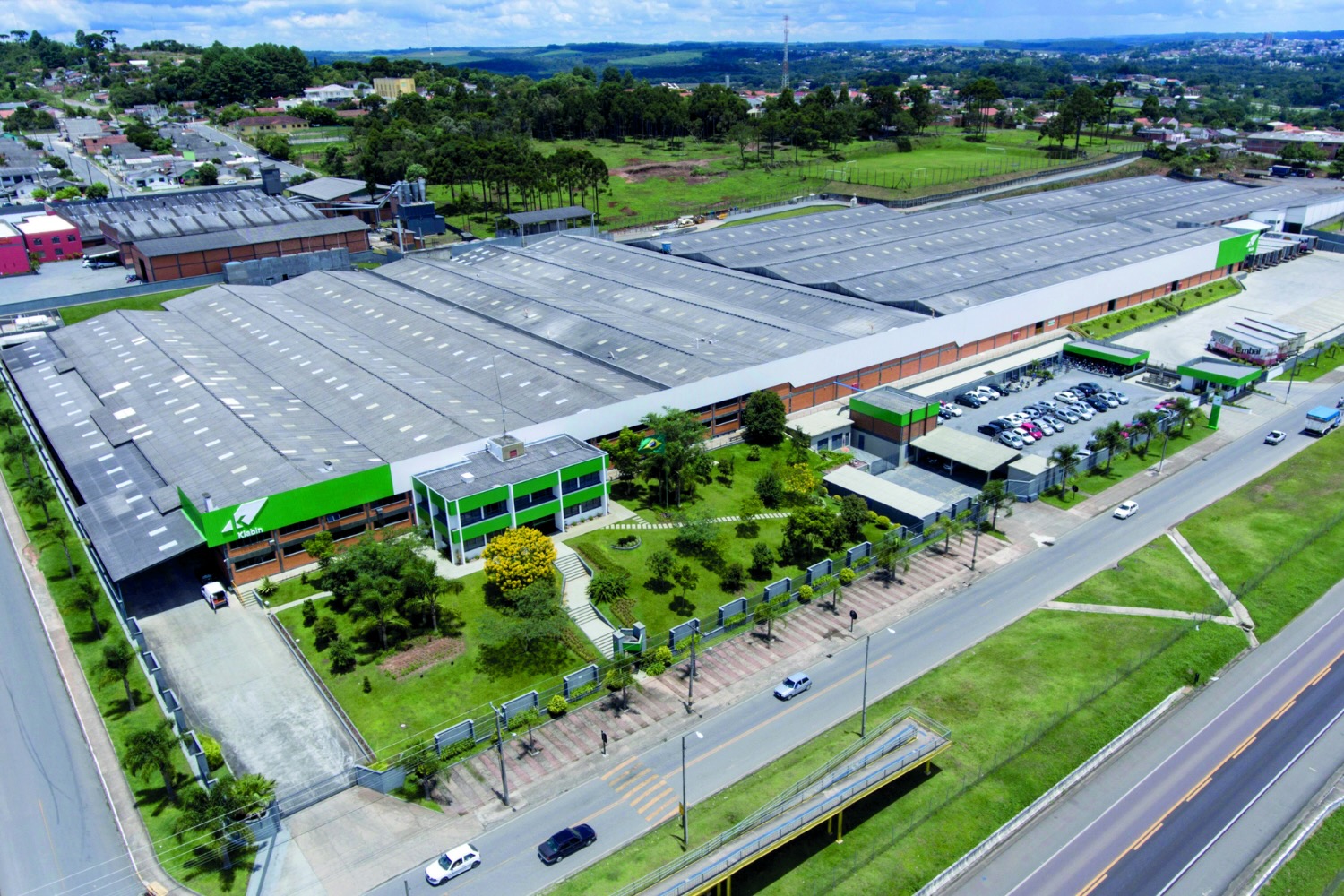
Klabin S.A. is Brazil’s largest producer and exporter of packaging paper and paper packaging solutions, with a diversified business spanning pulp, paper, and converted packaging products . The company operates an integrated model – it produces market pulp (short-fiber, long-fiber and fluff), converts part of that pulp into paper (kraftliner containerboard and coated board for liquid packaging), and further converts paper into corrugated boxes and industrial bags. This diversified product mix provides resilience against market volatility in any single segment . Export markets are important, but Klabin is also a leader in the domestic Brazilian packaging market. Its vertical integration (pulp → paper → packaging) and broad portfolio enable Klabin to navigate industry fluctuations more effectively than pure-play pulp or paper companies .
Klabin’s diversified business segments (Q3 2025 volume breakdown by product). The company’s sales volume is split among pulp (38% of Q3 2025 volume), paper (35%), and packaging (27%), reflecting a balanced mix . This integration across the chain (67% of paper output is converted internally) underpins more stable performance.
Founded in 1899, Klabin has grown into a 4.7 million ton per year pulp and paper producer following recent expansions . It is headquartered in São Paulo and listed on the B3 (São Paulo Stock Exchange) under the unit ticker KLBN11, which represents 1 common share + 4 preferred shares . Internationally, Klabin has a Level-1 ADR program (OTC: KLBAY) with each ADR representing two KLBN11 units . (Note: An ADR is an American Depositary Receipt that allows U.S. investors to own the stock via U.S. markets.) Klabin’s ownership includes the Klabin family and other shareholders, but it has a broad free float with over 600 thousand investors as of recent counts. The company’s scale and integrated operations make it a key player in the global pulp & paper industry, often compared with Brazilian peer Suzano and international packaging companies.
Expansion Plans and Long-Term Growth Strategy
Puma II Project: Klabin recently completed a major expansion cycle called Project Puma II, the largest investment in its history . Puma II involved R$12.9 billion in two new paper machines at its Puma mill in Paraná . The first machine (MP27) started up in 2021 producing Eukaliner® – the world’s first kraftliner made 100% from eucalyptus fiber . The second machine (MP28) came online in mid-2023, adding capacity in coated paperboard (liquid packaging board) . Together these two machines added 910,000 tons/year of paper capacity, bringing Klabin’s total production capacity to ~4.7 million tons per year of pulp and paper . This expansion solidifies Klabin’s position as a top global producer of containerboard and cartonboard, marking its entry into the high-value liquid packaging carton market . Puma II’s completion in 2023 means Klabin now reaps the volume growth and efficiency benefits of this investment, which was the largest private investment ever in Paraná state . The new products (like Eukaliner® kraftliner and white-coated board) also expand Klabin’s portfolio and should help drive revenue growth and margin expansion in coming years.
Forestry Base Expansion – Caetê and Plateau Projects: In late 2023, Klabin undertook Project Caetê, acquiring a large package of forestry assets (timberland and plantations in Paraná) for approximately R$5.8 billion . This bolstered Klabin’s raw material self-sufficiency for future growth but also increased debt. To optimize capital, in 2024 Klabin announced Project Plateau, a partnership with a timberland investment group (TIMO) to inject cash into some of these forestry assets . Under Plateau, Klabin contributed ~23,000 hectares of forests and 4,000 hectares of land into new SPV companies, and the TIMO (led by BTG Pactual’s Timberland group and Canada’s BCI) committed R$1.8 billion upfront (with up to R$0.9B additional by 2Q25) for a minority stake . This deal, announced August 2025, brings the total Plateau project investment to R$2.7 billion by end of 2025 . Importantly, Klabin retains control of the SPVs and preferential rights to the wood produced . In effect, Klabin monetized part of its forests to reduce leverage and fund growth while ensuring a secure fiber supply for its mills. The Plateau Project reflects Klabin’s commitment to capital discipline – it frees up cash (reducing net debt) and optimizes ROIC, yet supports future expansion by guaranteeing wood availability . These forestry investments position Klabin to support further expansion in production when market conditions are right, such as a potential new pulp line or other projects in the future, without raw material bottlenecks.
Strategic Outlook: Klabin’s expansion strategy is geared toward long-term, sustainable growth. With Puma II operational, the company is focusing on ramping up new capacity, capturing new markets (exporting more packaging board, for example), and improving efficiencies. Management has indicated plans to increase the share of higher-value coated board in its product mix to ~45–47% of output going forward, leveraging the new capacity (up from roughly one-third historically) . Additionally, Klabin continues to invest in sustainability and innovation (e.g. bio-based packaging, recycling initiatives) to align with global trends toward eco-friendly packaging. The completed expansions put Klabin in a strong position for capital appreciation over the long term: the heavy capex phase is ending, so free cash flow is set to rise as new assets contribute and capital spending moderates. In sum, Klabin’s growth cycle – from Puma II’s capacity boost to the Plateau forestry project – is oriented toward ensuring the company can increase volumes and revenue in coming years while maintaining a stable raw material supply and improving its balance sheet.
Recent Financial Performance & Outlook
Robust 3Q 2025 Results: Klabin’s latest results highlight the payoff from its expansion and diversified model. In 3Q 2025, Klabin achieved sales volume of 1.067 million tons, up 14% year-on-year, driven by contributions from new capacity and strong demand . Net revenue grew 9% YoY to R$5,426 million in the quarter . Profitability surged – Adjusted EBITDA jumped 39% YoY to R$2,117 million, with EBITDA margin expanding to 39% . This substantial EBITDA growth was fueled by higher volumes and a richer product mix, as well as cost efficiency (cash cost per ton fell ~2% vs the prior quarter) . The Paper & Packaging segment contributed ~66% of EBITDA in Q3, while the Pulp segment contributed ~34% . This underscores how the integrated packaging business is providing earnings stability even as pulp markets cycle. Klabin generated R$699 million in free cash flow in the quarter, translating to a healthy 12.6% free cash flow yield annualized . Net income for 3Q25 was R$349 million attributable to shareholders , which was lower than a year ago due to higher depreciation (from new assets) and financing costs, but the cash generation and EBITDA trend are clearly strong.
Resilience Amid Pulp Downturn: It’s worth noting that the global pulp market has been in a downturn (low prices) through 2024–2025, which has pressured pure pulp producers. Klabin’s CEO noted they are “at the worst moment for [pulp] prices,” but highlighted that Klabin’s diversified model and top-tier forestry productivity have helped it weather the storm . For example, while pulp prices fell, Klabin’s packaging divisions saw volume and revenue growth (corrugated box revenues were +20% YoY in Q3) which helped offset the pulp weakness . This balance is part of Klabin’s strategy: the packaging demand tends to be more stable (tied to consumer goods, e-commerce, etc.), providing a buffer during commodity pulp troughs. The company has also focused on cost control and operational efficiency to maintain margins.
Outlook: Looking ahead, Klabin’s management and analysts have a positive medium-term outlook. Itaú BBA (a major Brazilian investment bank) projects a strong recovery in global pulp fundamentals by 2026, with prices rebounding toward ~$580/ton . This would benefit Klabin’s pulp segment in a couple of years. In the interim, Klabin is focusing on deleveraging (using the Plateau proceeds and cash flows to bring down net debt) and optimizing its product mix. By 2025–2027, Klabin is expected to generate solid cash flows – roughly a 7% free cash flow yield on average – which supports both debt reduction and shareholder returns . In fact, at the current stock price the bank estimates Klabin can deliver an average 5.5% dividend yield going forward while still retaining ample cash for growth . The main challenges in the near term are macroeconomic and commodity-related: high interest rates in Brazil (which increase finance costs), currency fluctuations (as revenue is partly in USD from exports), and the weak pulp price environment through early 2025 . No major short-term catalysts are expected until the pulp cycle turns or new capacity (from Puma II) is fully absorbed by the market . Nonetheless, long-term investors will note that Klabin’s fundamentals are improving – leverage is coming down, operations are scaling up, and the company is set to “profit from a future rebound in pulp prices and stronger industry fundamentals,” as Itaú BBA notes . Additionally, secular trends like e-commerce growth and the push for sustainable packaging globally bode well for Klabin’s packaging papers business in the long run (packaging demand has shown steady growth across cycles ). Overall, the combination of expansion-driven growth and a stable dividend policy makes Klabin attractive for a long-term horizon focusing on both capital appreciation and dividend income.
Dividend Policy and Shareholder Returns
Klabin is known for balancing growth investments with shareholder returns. The company’s dividend policy targets distributing a percentage of cash generation (historically around 15%–25% of Adjusted EBITDA, depending on investment needs) via either traditional dividends or “Interest on Equity” (JCP) – a Brazilian mechanism that allows a tax-deductible shareholder payout. In recent years, Klabin has paid dividends quarterly. For example, in 2024 it paid out R$1.477 billion in shareholder remuneration , and in 2023 about R$1.34 billion . These payouts equate to a dividend yield in the mid-single digits. Indeed, Klabin’s trailing 12-month yield is around 5–6% and the projected forward yield is ~5.5% as mentioned . This is quite attractive compared to global peers and far above Brazilian risk-free rates were in years past (though Brazilian interest rates are high currently, making dividend yield less of an outlier).
Notably, Klabin commits to consistent quarterly payments. In Q3 2025, for instance, it distributed R$318 million in dividends, which was about 15% of that quarter’s EBITDA . The company has stated it aims to return 20% of EBITDA to shareholders when leverage permits, with a minimum of 15% in weaker periods . Even during heavy investment years for Puma II, Klabin maintained dividends (albeit at the lower end of the range). Now that major capex is winding down, there is potential for higher payouts or share buybacks – management has even mentioned analyzing buybacks as free cash flow grows . Itaú BBA forecasts that, based on Klabin’s cash generation, the stock should deliver around a 5.5% average dividend yield from 2025–2027 , while still investing in growth. This combination of dividends and an improving earnings trajectory gives a total return appeal – investors can collect a decent yield while the company’s expansions drive future earnings (and stock price) higher. It’s also worth noting Klabin’s payouts include JCP, which for foreign investors are subject to withholding (we discuss tax below), but the gross yield figure of ~5%+ is before any taxes.
The long-term dividend outlook is positive: as Klabin’s leverage comes down and EBITDA rises with new capacity, the company could even consider increasing the payout ratio or doing special distributions (for example, if it monetizes more assets or if pulp prices surge unexpectedly). In summary, Klabin offers a blend of income and growth – a solid baseline yield now, with room for dividend growth and capital appreciation as the expansion projects contribute. This makes it appealing for investors seeking stable cash returns and an opportunity for share price gain over a long-term horizon.
Valuation and Peer Comparison
Valuation Metrics: Despite its strong fundamentals, Klabin’s stock is currently trading at a discount to historical valuation. According to Itaú BBA research, Klabin is valued at around 6.2× EV/EBITDA (2026E) based on current prices . This is significantly lower than Klabin’s own 8.0–8.5× EV/EBITDA historical average range . In other words, the market is valuing Klabin cheaply relative to its past, likely due to short-term concerns (pulp cycle, Brazil macro) even as the company’s long-term outlook has improved. Klabin’s price-to-earnings (P/E) is not as straightforward (due to FX gains/losses and biological asset accounting affecting net income), but the EV/EBITDA and free cash flow yield give a clear picture of undervaluation. The stock’s free cash flow yield is around 7% going forward , which, combined with a 5–6% dividend yield, suggests an attractive total yield for investors. As Klabin’s new projects ramp up EBITDA and debt comes down, one would expect some re-rating closer to historical multiples – implying potential capital appreciation if the market recognizes this. Itaú BBA, for example, sees roughly 25% upside in the stock by 2026 based on fundamentals .
Local Peer – Suzano S.A.: The most relevant local peer is Suzano, a Brazilian pulp and paper giant. Suzano is the world’s largest hardwood pulp producer, focusing heavily on commodity market pulp (after its 2019 Fibria merger) with some paper businesses. For investors, one key difference is market access: Suzano offers a NYSE-listed ADR (ticker SUZ), whereas Klabin’s ADR is OTC (more on this in the next section). In terms of size, Suzano is larger (market cap ~$11 billion, vs Klabin ~$8–9 billion) and more globally dominant in pulp, but it lacks Klabin’s integration into packaging. Valuation-wise, Suzano also appears quite cheap – it trades around 5.8× EV/EBITDA (trailing) and is projected at 5.7× for 2026, falling to ~4.4× by 2027 as pulp prices recover . This low multiple is partly due to the depressed earnings during the pulp downturn. Suzano’s stock has a forward P/E ~7 and offers a dividend yield around 4% (the ADR had a $0.39 annualized dividend, ~4.3% yield at current price) . Suzano historically paid a modest dividend (averaging ~1.5% yield over the past decade) , but due to a one-off special payout in 2023 its current yield spiked higher to ~4%. Going forward, Suzano’s dividend is likely to fluctuate with pulp profits. In summary, Klabin vs Suzano: Klabin has a more diversified revenue stream (less volatile), a higher current dividend yield, and is trading at a slight EV/EBITDA premium to Suzano (6× vs ~5–6×) – which makes sense given Klabin’s greater resilience and downstream integration. Both are seen as long-term value plays in Brazil’s forestry sector. In fact, Itaú BBA rates both Klabin and Suzano as “Buy” for long-term investors, citing that by 2026+ the pulp cycle improvement and these firms’ strategic moves (Suzano’s tissue JV, Klabin’s asset sales for deleveraging) will unlock value . For a foreign investor, Suzano’s ready US listing might be more convenient, but Klabin’s profile may appeal to those seeking a steadier, income-generating investment.
Global Peers: Internationally, Klabin can be compared to both packaging companies and integrated forest-product companies. On the packaging side, large players include International Paper (IP) in the U.S., WestRock/Smurfit (which are merging), Mondi plc in Europe, and others. These companies have significant packaging operations and some pulp/paper production. Many global peers trade at higher valuations than Brazilian stocks. For instance, International Paper (a U.S. containerboard and packaging firm) currently trades around 12× EV/EBITDA (trailing) and offers a ~4.8% dividend yield . IP’s higher multiple reflects its U.S. listing and perhaps a still-recovering earnings base (IP had some one-time losses in 2025). Mondi, a UK-listed global packaging company, trades at roughly 8× EV/EBITDA (and about 12× forward P/E) , with a dividend yield around 4–5%. By comparison, Klabin at ~6× looks undervalued on an international scale – even relative to emerging-market peers. Another peer in pulp is Sylvamo (the international paper business spin-off), or Nordic firms like UPM and Stora Enso, but those have different mixes (graphic paper, biofuels, etc.). Generally, pure pulp producers globally (e.g. Chile’s CMPC or Canada’s Canfor Pulp) also trade at low multiples in downturns, but Klabin’s mix sets it apart.
In summary, Klabin is valued at a discount both to its own history and to many peers. It offers a higher dividend yield than most global packaging companies (often 3–4% yields) and even slightly higher than Suzano’s yield . The market seems to be factoring in Brazil country risk and the current pulp slump. Should those factors ease (e.g., if Brazil’s interest rates decline or pulp prices rise), there is potential for Klabin’s multiples to expand. A re-rating from 6× to even 7.5× EV/EBITDA (still below its historical average) would significantly boost the stock price. Moreover, Klabin’s growth prospects (new capacity, new markets) outpace many mature global peers, which supports a positive long-term view.
Peer snapshot: To contextualize:
- Klabin (Brazil): ~6× EV/EBITDA (2026e) , ~5–6% dividend yield .
- Suzano (Brazil): ~5.7× EV/EBITDA (2026e) , ~4% dividend yield , high pulp exposure.
- Intl. Paper (US): ~12× EV/EBITDA , ~4.8% yield .
- Mondi (UK/EU): ~8× EV/EBITDA , ~5% yield (approx).
- Smurfit Kappa (EU): ~7–8× EV/EBITDA and ~4% yield (not cited above, but similar range).
- UPM/Kymmene (FI): ~7–9× EV/EBITDA, ~4% yield (heavily pulp and specialty paper). The picture shows Klabin is on the lower end of valuation and offers one of the highest yields in its sector – indicative of an undervalued asset if its growth and earnings prove sustainable.
Investing in Klabin – U.S. ADRs, Brazilian Stocks, and Tax Implications
Access via U.S. Markets (ADR): Foreign investors can invest in Klabin through its American Depositary Receipt (ADR) program. Klabin has a Level-1 ADR trading in the U.S. over-the-counter (OTC) market under the ticker KLBAY . Each ADR represents 2 units of KLBN11 . This ADR is sponsored (administered by a depositary bank) and allows investors to buy Klabin in USD, though being OTC, liquidity is lower than a major exchange listing. Prices of KLBAY will roughly track 2 × (KLBN11 price in BRL × FX rate) minus any minor ADR fees. It’s important to note that Level-1 ADRs are not listed on NYSE or NASDAQ, so trading volumes can be light and bid-ask spreads wider. Nonetheless, for a long-term investor, KLBAY provides a convenient way to invest in Klabin without a Brazilian brokerage account.
Access via Brazilian Market (B3): Alternatively, investors can buy Klabin units (KLBN11) directly on the B3 (São Paulo Stock Exchange). Many international brokerage platforms (and Brazilian brokers catering to foreign investors) enable trading on B3. KLBN11 is a fairly liquid unit in Brazil’s market indices. A foreign investor would typically register as a non-resident investor (under CMN Resolution 4,373) via a local custodian – many global brokers handle this on the backend. Once set up, an investor can trade KLBN11 in reals. One advantage of owning the local shares is access to full voting rights (via the common share portion of the unit) and liquidity during Brazilian trading hours. However, one must consider currency risk (BRL vs USD) and potentially higher transaction costs if your broker charges for international trades.
What about BDRs? The term BDR (Brazilian Depositary Receipt) usually refers to Brazilian instruments for foreign stocks (the mirror of ADRs). In Klabin’s case, since it’s a Brazilian company, it does not have a BDR in Brazil – its primary listing is already in Brazil. The confusion might arise because Brazilian companies issue ADRs abroad, not BDRs. So, for a foreign (say U.S.) investor, the relevant instrument is the ADR (KLBAY). For a Brazilian investor wanting to invest in a foreign company, they’d use a BDR – but that scenario is reversed here. In short, Klabin: listed in Brazil, ADR in U.S.; Suzano: listed in Brazil, ADR in U.S.. Suzano’s ADR is a Level-III ADR listed on the NYSE (ticker SUZ) , making it very accessible and liquid for U.S. investors. Klabin’s ADR being OTC means some U.S. investors might prefer to buy Suzano’s ADR for exposure to Brazil’s pulp/paper sector, given the ease of trading. However, with patience and a limit order, one can invest in KLBAY OTC without much issue, or use brokers that allow direct B3 access.
Tax Implications for International Investors: Brazil’s tax treatment for foreign investors is relatively favorable. **Dividends paid by Brazilian companies are currently not subject to Brazilian withholding tax for non-residents . This is because under current law (as of 2025) Brazil does not tax dividends at the company level – dividends are distributed from post-tax profits and are tax-free to shareholders. (Important: Brazilian lawmakers have discussed changing this policy to tax dividends in the future, but any such change has been delayed; a proposal for a 15% tax on dividends over a certain amount is on the table but not effective as of 2025 .) On the other hand, Brazil uses “Interest on Capital” (JCP) as an alternative payout, which is taxed: Interest on Equity is subject to a 15% withholding tax for non-residents (25% if the investor is in a known tax haven) . Klabin does pay part of its distributions as JCP at times (as seen in its dividend history), so foreign holders will see 15% tax withheld on those portions. For example, if Klabin declares R$1.00/unit as JCP, a foreign investor would receive R$0.85 (plus they might claim foreign tax credit in their home country for that 15%). Pure dividends would come gross. The ADR bank will handle these withholdings and pass through the net amount in USD to ADR holders.
Capital gains tax: For a non-resident investing in Brazilian stocks, capital gains are generally exempt from Brazilian tax as long as the investor is not domiciled in a tax-haven and registered correctly . Brazil wants to attract foreign portfolio investment, so they waive capital gains tax on B3 trades by foreigners (again, except for “tax paradises” which are taxed as locals). This means if you buy Klabin at X and sell at Y on the São Paulo exchange, Brazil won’t tax your gain. If you buy/sell the ADR in the U.S., Brazil also doesn’t tax that (it’s just a receipt). However, your own country may tax capital gains – e.g., U.S. investors will owe capital gains tax on ADR gains as with any stock.
U.S. Tax (for US investors): Klabin’s ADR is treated like any foreign stock. Dividends (including JCP) paid will be considered dividend income. Since Brazil withholds 15% on JCP, a U.S. investor can typically claim that as a foreign tax credit to offset U.S. taxes (the ADR custodian provides a 1099 form showing foreign tax paid). Dividends that were not taxed in Brazil (normal dividends) will be fully taxable in the US (and no foreign credit since none paid abroad). The ADR itself does not create any additional tax beyond what the underlying stock does, except small ADR fees that might be deducted from dividends (often a few cents per share). Non-U.S. investors should consult their tax treaties; many have treaties with Brazil (though Brazil has relatively few tax treaties compared to some countries, it does have with, for example, Japan, Portugal, etc., which can reduce withholding on interest/JCP in some cases).
Currency considerations: When investing in Klabin, one implicitly takes on Brazilian Real (BRL) exposure. The ADR price in USD will reflect not just Klabin’s performance in BRL, but also the USD/BRL exchange rate. A depreciation of the BRL could hurt the USD returns even if the stock does well in local terms (and vice versa). Brazil’s interest rates and inflation can influence the currency. Over a long horizon, this currency risk is a factor to weigh. Some investors hedge FX, but many simply accept the currency volatility as part of emerging-market investing. On the positive side, Klabin’s exports provide a natural hedge – when BRL weakens, the company’s export revenue (in USD) is higher in BRL terms, which can boost earnings and partially offset the currency effect on the stock.
Suzano’s ADR vs Klabin’s ADR: Since Suzano has a NYSE ADR (1 ADR = 1 share) and Klabin an OTC ADR (1 ADR = 2 units), an international investor might wonder which is the better vehicle. Suzano’s ADR is far more liquid and easier to trade. Klabin’s ADR, while perfectly legitimate, may require patience to acquire without moving the price. Some international investors choose to buy Brazil-focused ETFs or funds that include Klabin, as another route. But for a dedicated investor, buying KLBN11 on the B3 or KLBAY ADR are both feasible routes. The tax outcome is similar in either case, as Brazil’s withholding and exemptions apply equally. The choice boils down to convenience and liquidity (ADR vs local).
Conclusion
Investment Thesis: Klabin offers a compelling combination of long-term growth potential and dividend income. The company has just emerged from a major investment cycle (Puma II) that has significantly expanded its production capacity and product offerings – setting the stage for revenue and earnings growth in the coming years. Its strategic initiatives like the Plateau Project demonstrate prudent financial management, ensuring growth is pursued without jeopardizing balance sheet health. For an investor with a long-term horizon, Klabin provides exposure to fundamental positive trends: rising global demand for sustainable packaging, Brazil’s competitive advantages in forestry (fast-growing eucalyptus), and eventually an upswing in the pulp commodity cycle. At the same time, Klabin pays a steady dividend that currently yields around 5%+, providing tangible returns while you wait for the growth to materialize. This dual focus on dividend and capital appreciation suits investors looking for total return in the paper & packaging sector.
Risks: Investing in Klabin is not without risks – it is an emerging-market stock, so macro factors (Brazilian political and economic shifts, currency volatility) can impact performance. The pulp and paper industry is cyclical; a prolonged downturn in pulp prices or a global recession dampening packaging demand would weigh on results. Additionally, interest rates in Brazil have been high, which increases Klabin’s interest expenses (though rates are expected to ease going forward). These factors contribute to why Klabin’s valuation is low now. However, these are mitigated by the company’s strong execution and diversification, and they appear to be already priced in to a large extent.
Peer Perspective: Compared to its peers, Klabin stands out as a more diversified play than Suzano (less pulp price dependence) and with a higher yield than most global peers. Suzano might offer more pure pulp upside if one expects a huge pulp price rally, whereas Klabin offers a smoother ride with its mix of stable packaging revenue. International Paper or Smurfit may have more stable developed-market profiles, but they don’t have the growth trajectory that Klabin’s new capacity provides. In a sense, Klabin marries growth like a mid-cap company with dividends like a mature company, which can be attractive if one is comfortable with Brazil exposure.
How to Invest: Practically, foreign investors can invest via the KLBAY ADR (OTC) or by buying KLBN11 in São Paulo. Suzano’s example shows that having a NYSE listing can broaden the investor base – something Klabin currently lacks (it might consider upgrading its ADR in the future if international demand grows). Nonetheless, funds and institutional investors do hold Klabin via the local market and ADR. It’s also available in many emerging-market equity indices and funds, which provides some baseline demand.
In closing, Klabin is a well-managed company with over a century of history, now entering a new era of scale. Its expansion plans underscore a commitment to long-term growth, while its consistent payouts reflect a shareholder-friendly approach. The stock’s current undervaluation relative to peers provides an opportunity for investors who can look past short-term market noise. For a foreign investor seeking exposure to Brazil’s flourishing pulp & paper sector, Klabin offers a balanced investment case – a mix of growth and income – making it a worthy consideration alongside its better-known peer Suzano (which, as noted, does conveniently offer an NYSE ADR) . With the latest results showing strong EBITDA momentum and the company’s strategic moves to ensure sustainability (financial and environmental), Klabin is positioned to deliver solid returns over a long-term investment horizon. As always, due diligence and an assessment of one’s risk tolerance (especially regarding currency and emerging market risk) should guide the decision, but the outlook for Klabin remains fundamentally positive moving forward.
Sources: Recent company earnings releases and investor presentations ; Klabin’s Investor Relations reports and material facts ; News on expansion projects ; Itaú BBA analyst commentary ; and B3/broker data on stock/ADR and tax regulations . These highlight Klabin’s current performance, strategic initiatives, and the investment framework for foreign shareholders.
Leave a Reply