
Opening Summary
Brazilian markets end the week navigating a complex mix of domestic political risk, sector-specific dynamics, and global macro uncertainty. On the political front, legal experts are warning about potential clashes between Brazil’s Supreme Court (STF) and its electoral court (TSE) during the upcoming municipal elections, while a new Datafolha poll is expected to test President Lula’s political standing. In the markets, the Ibovespa is trading in line with global risk sentiment, as investors digest stronger corporate earnings that paradoxically are not translating into higher share prices.
For foreign investors, today’s key themes are: (1) the evolving legal and institutional framework around elections and its implications for governance risk; (2) the resilience of Brazil’s high-end real estate market in São Paulo, which is decoupling from broader property trends; (3) the apparent disconnect between rising corporate profits and falling stock prices; and (4) global macro drivers—from US rates and debt concerns to geopolitical tensions—that are shaping flows into emerging markets like Brazil.
Main News Stories
1. Political & Institutional Risk: STF vs. TSE and Lula’s Poll Numbers
STF could override electoral court decisions during the election
A leading electoral lawyer, Gustavo Bonini Guedes, told InfoMoney that Brazil’s Supreme Federal Court (STF) may “override” or effectively overrule decisions made by the Superior Electoral Court (TSE) during the upcoming municipal elections. The concern is that, in contentious cases involving candidacies, campaign rules, or disinformation, political actors may appeal to the STF, which could step in and revise TSE rulings even in the heat of the electoral process.
Brazil’s electoral system is overseen by the TSE, a specialized court that traditionally has the final word on electoral disputes. However, the STF sits above it in the judicial hierarchy. According to Guedes, the current institutional configuration and recent precedents suggest that the STF could become more assertive, creating overlapping jurisdictions and legal uncertainty during the campaign period. This is particularly relevant in a polarized environment where legal battles are used as political tools.
Why it matters for investors:
- Governance and rule-of-law risk: Frequent interventions by the STF into electoral matters could be seen as either a stabilizing force (if it protects democratic norms) or as a source of unpredictability (if decisions are perceived as politicized). Markets tend to dislike legal uncertainty, especially around elections.
- Policy continuity: Municipal elections (scheduled for October 2026) influence local governance and control of key cities like São Paulo and Rio de Janeiro, affecting infrastructure, urban development, and local tax policies. Legal disputes could delay or complicate policy implementation.
- Headline risk: International media coverage of institutional clashes can affect Brazil’s risk premium, especially for investors less familiar with the nuances of its judicial system.
Source: STF pode “atropelar” decisões do TSE durante eleição, diz advogado (InfoMoney)
New Datafolha poll may worry Lula’s campaign
Left-leaning outlet Brasil 247 reports that a new survey by Datafolha—one of Brazil’s most respected polling institutes—is expected to be released today and “tends to bring concern” to President Lula’s political camp. The poll will likely capture the impact of the “Fábio Luís case,” referring to scrutiny around Lula’s son, which has generated negative headlines and political noise.
While this is not a presidential election year, Lula’s approval ratings and the performance of his allies in opinion polls matter for the administration’s ability to push its legislative agenda. Lower popularity can embolden opposition forces in Congress and at the state and municipal level, potentially complicating fiscal reforms, tax changes, and privatization or concession programs.
Why it matters for investors:
- Reform momentum: A weaker political standing could slow progress on structural reforms (tax simplification, fiscal rules, privatizations) that investors view as essential for long-term growth and debt sustainability.
- Market sentiment: Negative polling surprises often translate into short-term volatility in the Ibovespa and the Brazilian real (BRL), particularly for sectors more exposed to government policy (banks, utilities, state-linked companies).
- Municipal elections setup: The poll will be seen as an early indicator of how Lula-aligned candidates might perform in key cities, which in turn affects local investment environments.
Source: Novo Datafolha sai hoje e tende a trazer preocupação para a campanha de Lula (Brasil 247)
Prosecutor General pushes Luchsinger case back to lower court
Brazil’s Prosecutor General (PGR), Paulo Gonet, has asked that the case involving businesswoman Roberta Luchsinger be sent back to a first-instance court, arguing that there is no evidence of involvement by any authority with “foro privilegiado” (special jurisdiction for high-ranking officials). The PGR states that alleged business dealings between Luchsinger and the Lula government did not occur as initially suggested, and that the facts should be investigated separately without tying them to officials who enjoy special judicial protections.
Why it matters for investors:
- Corruption and governance perception: Clarifications by the PGR can reduce the risk of the case snowballing into a broader corruption scandal involving the federal government, which could have weighed on market sentiment.
- Institutional credibility: A more cautious stance by the PGR may be viewed positively if it signals a commitment to evidence-based prosecution rather than politically driven cases.
Source: Negócios entre Luchsinger e o governo Lula não ocorreram (Brasil 247)
2. Market Performance & Global Backdrop
Ibovespa closes the week tracking global PMIs and UK retail data
The Ibovespa (IBOV), Brazil’s main equity index, is closing the week with traders closely monitoring global macro indicators rather than domestic data. According to Money Times’ live coverage, markets are focused on:
- Retail sales numbers from the United Kingdom
- Manufacturing, services, and composite Purchasing Managers’ Indexes (PMIs) for the eurozone, UK, and United States
These indicators give a high-frequency snapshot of global economic activity. Stronger-than-expected PMIs in developed markets can support risk appetite and commodity demand, while weaker readings reinforce recession fears and push investors toward safer assets like US Treasuries, often at the expense of emerging markets.
Why it matters for investors:
- External drivers dominate: On days like today, Brazilian assets move more in response to global risk sentiment than to local news, underscoring the importance of monitoring international data releases.
- Sector sensitivity: Cyclical sectors on the B3 (Brazil’s stock exchange), such as steel, mining, and consumer discretionary, are particularly sensitive to global growth expectations reflected in PMIs.
Source: Tempo real: Ibovespa fecha semana de olho nos PMIs globais (Money Times)
Wall Street futures rise despite rate pressure and Iran tensions; Bitcoin jumps 7%
InfoMoney reports that New York futures are trading higher even as investors weigh persistent pressure on interest rates and rising tensions involving Iran. At the same time, Bitcoin is up about 7%, suggesting renewed risk appetite in the crypto space.
The article highlights that markets are digesting a combination of factors: expectations that central banks, particularly the US Federal Reserve, will keep rates higher for longer; geopolitical risks in the Middle East; and pockets of speculative enthusiasm in digital assets. For Brazilian markets, US equities and rates remain key drivers of capital flows and risk premiums.
Why it matters for investors in Brazil:
- Risk-on vs. risk-off: Rising US futures and a rally in Bitcoin point to a short-term “risk-on” environment, which typically supports emerging market equities and currencies, including Brazil’s.
- Rates channel: However, higher-for-longer US rates increase competition for capital, potentially limiting inflows to Brazilian bonds and equities unless domestic yields remain attractive.
- Crypto spillover: Brazil has a relatively vibrant crypto user base and listed firms exposed to digital assets or fintech; strong moves in Bitcoin can indirectly affect sentiment toward these names.
Source: Futuros de NY sobem apesar da pressão sobre juros e tensão com Irã; Bitcoin salta 7% (InfoMoney)
Musk warns about record US debt crossing USD 40 trillion
Brasil 247 notes that Elon Musk has publicly warned about the risks of US public debt, which has surpassed USD 40 trillion and could reach USD 50 trillion—a level he suggests might be a “critical point.” While this is an opinion rather than an official forecast, it taps into a growing concern among investors about US fiscal sustainability and the implications for global interest rates and inflation.
Why it matters for Brazil:
- Global rates and risk premiums: Persistent worries about US debt can keep global yields elevated. For Brazil, which already has a high domestic interest rate structure, sustained high global rates can limit the relative attractiveness of Brazilian assets.
- Currency dynamics: If US debt concerns eventually weaken the dollar, that could support emerging market currencies, including the BRL, though this is highly uncertain and dependent on policy responses.
Source: Musk alerta para endividamento recorde dos Estados Unidos (Brasil 247)
3. Corporate Earnings: Profits Up, Shares Down
The paradox of the earnings season
InfoMoney highlights a striking paradox in the current Brazilian earnings season: corporate profits are generally rising, but share prices are falling. Companies across several sectors are reporting year-on-year growth in net income and EBITDA, reflecting operational efficiencies, cost controls, and in some cases revenue expansion. Yet the market reaction has been negative, with many stocks selling off after results.
The article points to several possible explanations:
- High expectations: After a strong run in some names earlier in the year, investors may have priced in robust results, making it difficult for companies to “beat” expectations.
- Forward guidance: Even solid current numbers may be overshadowed by cautious outlooks, particularly in sectors sensitive to interest rates (e.g., retail, real estate, financials).
- Macro over micro: Global risk sentiment and domestic political noise may be driving valuations more than company-specific fundamentals.
Why it matters for investors:
- Valuation opportunities: For long-term investors, a disconnect between improving fundamentals and falling prices can create attractive entry points, especially in quality names with strong balance sheets.
- Need for selectivity: The broad-based sell-off suggests that stock-picking and sector rotation are critical. Not all earnings beats are equal; investors should distinguish between cyclical and structural improvements.
- Impact on ADRs: Many Brazilian blue chips are listed as ADRs in New York. US-based investors may see Brazilian ADRs under pressure despite solid results, reflecting global EM sentiment rather than company performance.
Source: Lucros crescem, ações caem: o paradoxo da temporada de balanços (InfoMoney)
4. Real Estate & Consumption: Luxury Property Market in São Paulo
Luxury segment creates its own dynamic in São Paulo’s real estate
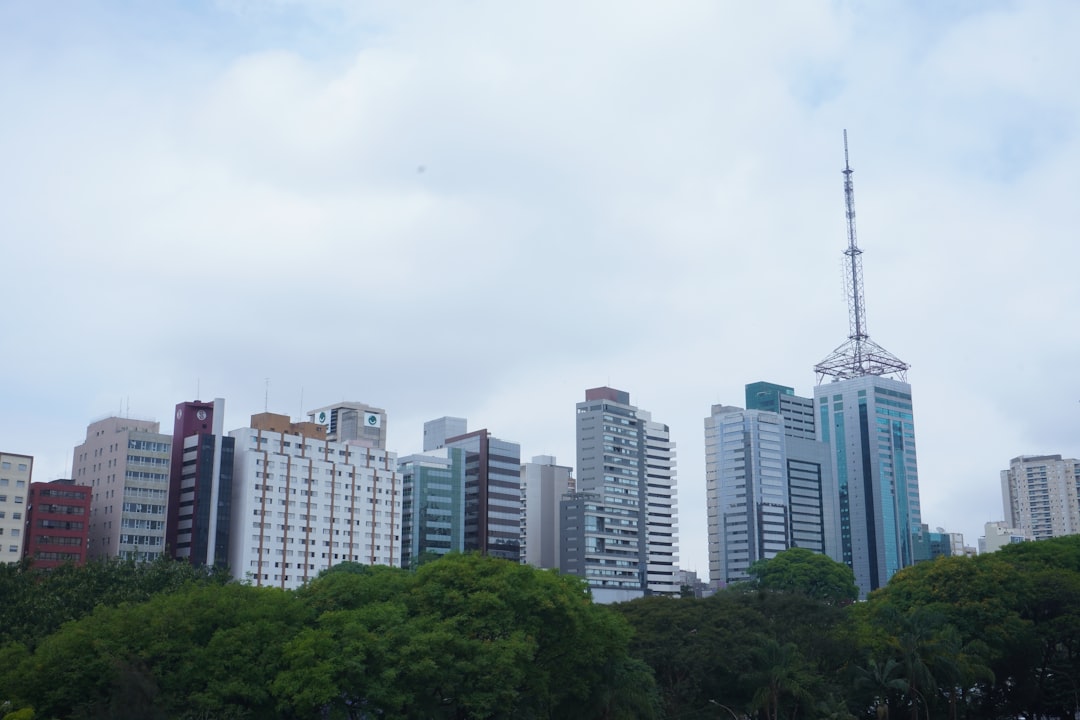
InfoMoney reports that the luxury residential market in São Paulo is increasingly decoupled from the broader property sector. In prime neighborhoods such as Itaim Bibi, Vila Nova Conceição, Jardim Europa, and Jardins, sales of high-end apartments and houses remain robust despite tighter credit conditions and macro uncertainty.
Key points from the article include:
- Resilient demand: High-net-worth individuals continue to buy and upgrade properties, often paying cash or using lower leverage than the mass market.
- Supply constraints: Strict zoning rules and limited available land in central areas keep supply tight, supporting prices.
- Investment appeal: Luxury units are increasingly viewed as safe-haven assets and long-term stores of value, particularly by wealthy families and institutional investors.
Why it matters for investors:
- Developers and REITs: Listed developers with exposure to high-end projects in São Paulo may benefit from stronger margins and faster sales cycles than peers focused on lower-income segments.
- Urban economics: The luxury market’s resilience suggests ongoing concentration of wealth and economic activity in São Paulo’s core areas, which can influence retail, services, and infrastructure investment.
- Credit risk segmentation: The divergence between luxury and mass-market real estate underscores the importance of segment analysis when investing in Brazilian property-related equities or credit.
Source: O luxo cria sua própria dinâmica no mercado imobiliário de São Paulo (InfoMoney)
5. Geopolitics & External Environment
Russia, Ukraine, and Western strategy
Russia’s foreign ministry spokesperson Maria Zakharova stated that Western powers are using Ukraine as a platform to pressure Moscow, focusing on geostrategic leverage, access to natural resources, and weakening Russia’s global position. This rhetoric underscores the ongoing geopolitical tensions that have disrupted commodity markets—particularly energy and agricultural exports—since 2022.
Relevance for Brazil:
- Commodity prices: Continued instability around Russia and Ukraine can keep global energy and grain prices volatile. Brazil, a major exporter of soy, corn, and other agricultural products, can benefit from higher prices but faces higher input costs (e.g., fertilizers) and global demand swings.
- Diplomatic positioning: Brazil’s attempt to maintain a neutral stance between Western powers and Russia can influence trade and investment flows, especially in energy and defense-related sectors.
Source: Chancelaria russa afirma que potências ocidentais usam a Ucrânia como plataforma contra Moscou (Brasil 247)
US carrier rotation in the Arabian Sea and tensions with Iran
Another piece from Brasil 247 notes that the USS George Washington aircraft carrier has arrived in the Arabian Sea to replace the USS Abraham Lincoln, as part of a rotation announced by US Central Command (Centcom). The Lincoln reportedly faced operational challenges and maintenance issues during its deployment. This move comes amid heightened tensions involving Iran and broader Middle East security concerns.
Why it matters for Brazil:
- Oil market risk: Increased military presence and tensions in the region can raise the risk premium on oil prices. Brazil, as a growing oil producer and exporter (notably via Petrobras and pre-salt fields), can see higher revenues but also faces global volatility in energy markets.
- Shipping and insurance costs: Heightened regional risk may affect shipping routes and insurance costs, impacting Brazilian exporters’ logistics.
Source: Photo by Vinícius Costa on Unsplash
📬 Follow Easy Brazil Investing for more English-language coverage of Brazil’s best investment opportunities. Or follow us on X
Leave a Reply