
Opening Summary
Brazil enters the final week before its 2026 general elections with a mix of heightened political tension, regulatory noise, and global macro risks that will shape asset prices in the short term. Domestically, the unfolding “Vorcaro–Banco Master” scandal is escalating, drawing in high-profile political figures and raising questions about governance, corruption, and institutional resilience. At the same time, the government is signaling tougher controls on the booming online betting sector, including restrictions on instant payments via Pix, a move that could impact fintechs, banks, and gaming platforms.
Externally, investors in Brazilian assets must also track geopolitical developments that could affect global risk appetite and commodity prices. Tensions around the Strait of Hormuz and the broader Middle East, Russia–Europe relations, and a renewed attempt at strategic accommodation between China and the United States all feed into the global macro backdrop that drives flows into emerging markets like Brazil. Meanwhile, global debates on AI, entrepreneurship, and energy infrastructure highlight structural themes that intersect with Brazil’s own policy and investment agenda in technology and power grids.
Foreign investors should pay particular attention to: (i) political risk and institutional responses to corruption scandals; (ii) regulatory tightening around digital payments and betting; (iii) pre-election portfolio positioning advice from local institutions; and (iv) how global energy and geopolitical developments may influence Brazil’s currency, rates, and equity risk premia.
Main News Stories
1. Political Risk Watch: Vorcaro, Banco Master and Flávio Bolsonaro Flights
The most sensitive domestic story for political risk today centers on the widening scandal involving Banco Master and businessman Danilo Vorcaro, which is increasingly entangling senior political figures.
STF Petition to Track Flights Linked to Flávio Bolsonaro
Federal deputy Lindbergh Farias has petitioned Brazil’s Supreme Federal Court (STF) to preserve flight records and authorize searches of private jets allegedly linked to businessman Danilo Vorcaro. The goal is to investigate trips made by Senator Flávio Bolsonaro (son of former President Jair Bolsonaro), including a flight with his family in January 2025. The request aims to prevent the destruction or alteration of evidence as the Banco Master–Vorcaro investigation deepens.
Source: Lindbergh pede buscas em jatos ligados a Vorcaro por voos de Flávio Bolsonaro (Brasil 247)
Why it matters for investors:
- Institutional stress test: Brazil’s Supreme Court and federal police have been central to recent anti-corruption operations. How they handle this case will influence perceptions of rule of law and institutional independence.
- Polarization risk: Any investigation that touches the Bolsonaro family risks further polarizing politics, potentially complicating post-election governability and reform agendas.
- Headline risk: Global investors often price Brazil with a “political risk premium.” Escalating scandals can temporarily widen credit spreads and pressure the BRL, especially in a risk-off global environment.
Lula’s Harsh Rhetoric on the Vorcaro–Banco Master Scandal
President Luiz Inácio Lula da Silva escalated his public rhetoric on the Vorcaro case, stating that he had “never seen so much rot” and claiming Vorcaro “managed to corrupt everyone: either with money or with orgies.” Lula argued that it is necessary to have the courage to speak openly about what really happened in the Banco Master scandal.
Source: “Nunca vi tanta podridão. Vorcaro conseguiu corromper todo mundo: ou com dinheiro ou com orgia”, diz Lula (Brasil 247)
Why it matters for investors:
- Signal of political strategy: Lula’s framing suggests he may use the scandal to reinforce a narrative of cleaning up corruption while also weakening political opponents connected to Vorcaro or Banco Master.
- Financial sector scrutiny: Any scandal involving a bank (even if mid-sized) can prompt tighter oversight or regulatory responses from the Central Bank and other authorities, with spillovers to the broader financial sector.
- Market sentiment: Aggressive rhetoric can increase short-term volatility as investors reassess the risk of new investigations, legislative inquiries, or regulatory changes affecting financial institutions and politically exposed persons.
For now, the market impact remains mostly in the realm of risk perception and sentiment. But if investigations uncover systemic issues in banking supervision or implicate key political figures in ways that threaten policy continuity, the impact could become more material.
2. Domestic Regulation: Crackdown on Betting and Pix
Government Plans to Block Pix/TED for Betting Companies
In an important regulatory signal, government representative Durigan stated that Pix and TED transfers will be prohibited for companies whose main activity is betting. Pix is Brazil’s instant payment system, created by the Central Bank, and has become ubiquitous for person-to-person and business transactions. TED is a traditional bank transfer mechanism.
Source: Durigan: Pix e TED serão proibidos a empresas que tenham como finalidade apostas (InfoMoney)
Why it matters for investors:
- Impact on betting sector: Online betting and sports betting (“apostas esportivas”) have grown rapidly in Brazil. Restricting Pix and TED could significantly raise transaction frictions, impacting revenues and valuations of betting platforms and related marketing/affiliate businesses.
- Fintech exposure: Many Brazilian fintechs and neobanks derive transaction volume from gaming-related flows. A ban could reduce fee income and transaction volumes for payment processors and digital wallets that serve betting companies.
- Regulatory precedent: The move signals a willingness by authorities to use payment infrastructure as a policy lever. This could have future implications for other “sensitive” sectors (e.g., crypto, high-risk lending), adding a layer of regulatory risk for financial innovation.
Potential market impact:
- B3-listed banks and fintechs: Traditional banks may see a modest benefit if some flows migrate to more regulated channels or if they already have stricter policies. Fintechs with high betting exposure may face growth headwinds.
- FX and rates: The measure itself is unlikely to move the BRL or sovereign curve, but it fits into a broader narrative of more active regulatory intervention by the state, which some investors may interpret as a mild negative for the business environment.
3. Global Geopolitics: Hormuz, Russia–Europe, and China–US
Iran Pushes Negotiated Reopening of the Strait of Hormuz
Iranian President Masoud Pezeshkian has publicly defended a negotiated solution to reopen the Strait of Hormuz, a critical chokepoint for global oil shipments. He conditioned the resumption of trade through the route on reaching an understanding with the United States and explicitly rejected the use of force to resolve the crisis. In parallel, Iran is awaiting a formal US response to a plan presented at the United Nations to suspend hostilities and restore navigation within seven days. Some reports suggest former US President Donald Trump has already rejected the proposal.
Sources:
Presidente do Irã defende negociação para reabrir o Estreito de Ormuz (Brasil 247) and
Irã aguarda resposta dos EUA a plano para reabrir o Estreito de Ormuz (Brasil 247)
Why it matters for investors in Brazil:
- Oil price risk: Any disruption or perceived risk to traffic in the Strait of Hormuz can push up global oil prices. Brazil is both an oil exporter (via Petrobras and others) and a domestic consumer, so effects are mixed:
- Higher oil prices can support earnings and valuations for Brazilian oil producers and related services.
- But they can also fuel domestic inflation, complicating the Central Bank’s monetary policy and affecting rates and FX.
- Risk sentiment: Escalating tensions in the Middle East typically reduce risk appetite for emerging markets broadly, which can widen spreads and weaken currencies, including the BRL.
Putin Denies War Plans Against Europe
Russian President Vladimir Putin stated that Russia has no plans to wage war against Europe, accusing Western leaders of inflating the threat to maintain support for Ukraine. He framed any future negotiations as contingent on Moscow’s interests and security guarantees.
Source: Putin nega planos de guerra contra a Europa e acusa líderes de elevar tensão (Brasil 247)
Implications for Brazilian markets:
- Indirect macro channel: Brazil is not directly involved, but European economic performance, energy costs, and risk premia affect global capital flows and commodity demand, including for Brazilian exports.
- Safe haven dynamics: If tensions escalate, flows may move from riskier EM assets into US Treasuries or core European bonds, pressuring Brazilian assets. Conversely, any de-escalation can support EM risk-on trades.
China–US: From Political Agreement to Concrete Actions
On the positive side of global geopolitics, Chinese President Xi Jinping concluded a visit to Washington, where he held talks with Donald Trump focused on trade, artificial intelligence, and crisis prevention. Xi emphasized the importance of dialogue and a new trade agreement. Chinese state-affiliated outlet Global Times argued that the political understandings reached between China and the US must be transformed into concrete actions, highlighting three areas: trade, AI cooperation, and youth exchanges.
Sources:
Xi Jinping encerra visita aos EUA com defesa de diálogo e acordo comercial (Brasil 247) and
China e EUA devem transformar acordo político em ações concretas, diz Global Times (Brasil 247)
Why this matters for Brazil:
- Global trade stability: Reduced US–China tensions generally benefit global trade and commodity demand. Brazil, as a major exporter of soy, iron ore, and oil to China, gains from stable or growing Chinese demand.
- Supply chain and FDI: A less confrontational US–China relationship may slow “friendshoring” trends that could otherwise favor Brazil as an alternative production base. However, it also reduces tail risks like tariffs or sudden trade disruptions that indirectly affect Brazil.
- Tech and AI: Any global framework on AI and tech standards will eventually influence Brazilian regulation and opportunities for local tech firms and foreign investors in Brazilian digital infrastructure.
4. Venezuela’s Political Process and Regional Risk
Venezuela’s Government–Opposition Dialogue Yields Agreements
Venezuela announced new agreements between the government and opposition after another round of dialogue. The deals reportedly cover measures related to media (news portals) and steps in renewing the country’s Supreme Court (Tribunal Supremo de Justicia). These are incremental moves in a broader process aimed at easing political tensions and potentially normalizing institutional functioning.
Source: Venezuela anuncia acordos para mídia e Justiça, após concluir mais uma etapa de diálogo com oposição (Brasil 247)
Relevance for Brazil:
- Regional stability: Venezuela’s political and economic crisis has had spillover effects across Latin America, including migration and energy cooperation. Any progress toward institutional normalization reduces regional risk.
- Energy and trade: Venezuela holds significant oil reserves. A gradual normalization may alter regional energy flows and investment opportunities, potentially competing or complementing Brazil’s own energy ambitions.
- Diplomatic positioning: Brazil under Lula has sought a more active role in regional diplomacy. Investors should monitor whether Brazil becomes a guarantor or facilitator in Venezuelan talks, reinforcing its role as a regional power but also exposing it to political criticism.
5. Global Themes: AI, Entrepreneurship, and Power Grids
Human Skills in the Age of AI – Brené Brown
InfoMoney highlighted comments by researcher and author Brené Brown, emphasizing that the most valuable skill in the AI era remains fundamentally human: the ability to connect, empathize, and build trust. She argues that surviving and thriving alongside AI requires rejecting an overly mechanistic, Jack Welch–style management approach and embracing human-centered leadership, especially as “humans can’t stand each other” in increasingly polarized environments.
Source: Brené Brown: A habilidade mais valiosa na era da IA continua sendo humana (InfoMoney)
Why this matters for investors in Brazil:
- Corporate governance: Brazilian companies that invest in human capital, culture, and leadership may be better positioned to integrate AI productively, reducing execution risk on digital transformation projects.
- Tech and services sector: For Brazil’s growing IT, BPO, and digital services industries, blending AI with human-centric service models can become a competitive differentiator in global markets.
Peter Thiel on Germany’s “Fear of Success”
Venture capitalist Peter Thiel criticized Germany for a “fear of success” that allegedly prevents the creation of new tech giants on the scale of Elon Musk or Mark Zuckerberg. He suggests cultural and regulatory constraints hinder entrepreneurial scaling.
Source: Peter Thiel: “Medo do sucesso” impede Alemanha de criar novas gigantes da tecnologia (InfoMoney)
Brazilian angle:
- Comparative advantage: Brazil faces its own structural challenges (tax complexity, bureaucracy, credit costs), but has demonstrated the capacity to produce large tech platforms (e.g., Nubank, Stone, Mercado Livre – Argentine but with large Brazilian operations).
- Policy implications: For investors, Thiel’s comments highlight the importance of regulatory and cultural environments. Brazil’s ongoing tax reform and digital economy policies will shape whether more “unicorns” can scale domestically.
Power Grids: Smaller, Smarter Networks
An InfoMoney piece discusses the global need for better power grids and argues they may be smaller and more decentralized. The article highlights Swedish entrepreneur Jonas Birg’s ideas on modular, resilient grids that can integrate renewables more efficiently than traditional centralized networks.
Source: O mundo precisa de redes elétricas melhores. E elas podem ser menores (InfoMoney)
Relevance for Brazil:
- Infrastructure investment: Brazil’s vast geography and heavy reliance on hydropower create both challenges and opportunities for grid modernization, including distributed generation and microgrids.
- Regulated utilities: Listed power companies on B3 may face capex demands but also new revenue opportunities in distributed energy, storage, and smart grid solutions.
- ESG and climate: Investors with ESG mandates will
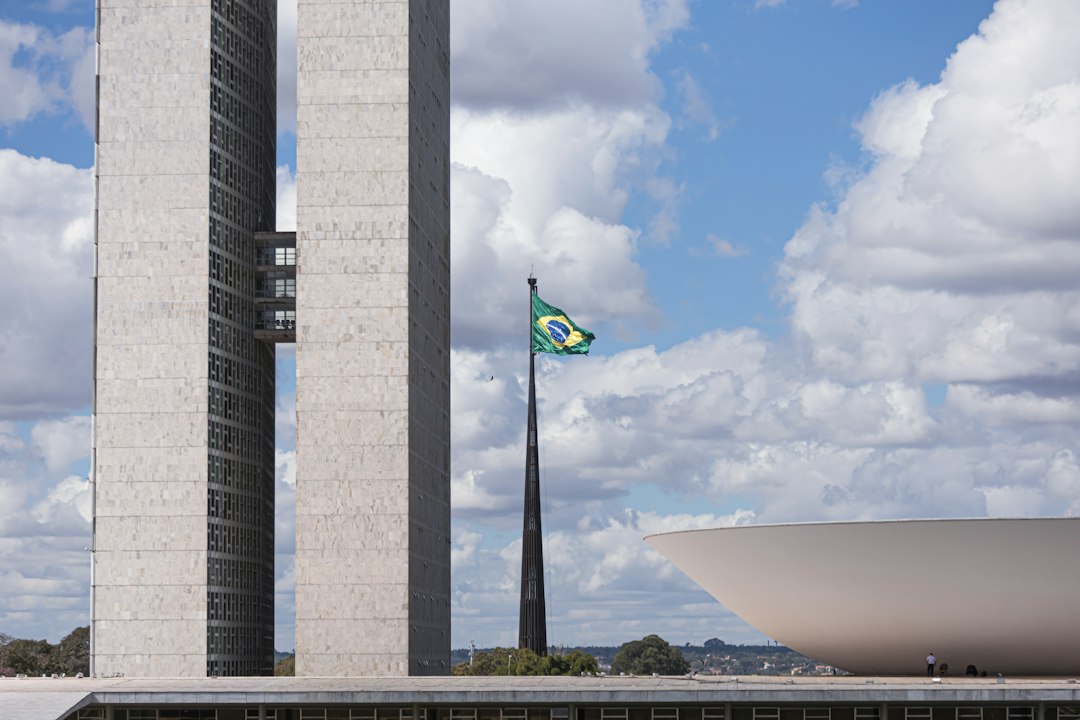
Photo by Gabriel Tiveron on Unsplash
📬 Follow Easy Brazil Investing for more English-language coverage of Brazil’s best investment opportunities. Or follow us on X
Leave a Reply