
Opening Summary
Brazilian markets enter the new week with a mix of strong equity momentum, a softer dollar, and important structural moves in energy, agribusiness finance, and digital payments. On the corporate side, Petrobras approved a multibillion-real investment package in fertilizers and oil & gas, while Fleury walked away from a major healthcare joint venture. In capital markets, the Ibovespa futures contract continues to ride a powerful uptrend, and the mini-dollar future is testing the psychologically important R$5.00 level.
Beyond the daily price action, several stories speak directly to how wealth is built and preserved in Brazil: financial planning, succession planning, and new ways Brazilians are using crypto-based cards to bypass traditional FX costs and IOF (a key Brazilian financial tax). For foreign investors, the key themes are: a state-controlled oil major doubling down on capex, tighter bank credit pushing agribusiness toward capital markets structures, growing fintech and crypto rails for cross-border flows, and a macro backdrop of a strong local equity rally with a calmer FX market.
Main News Stories
1. Petrobras greenlights R$61 billion in fertilizers and oil & gas
Petrobras (PETR4, PETR3) announced that its board has approved approximately R$61 billion in investments, covering the restart of a fertilizer plant in Mato Grosso do Sul and expansion of oil and gas production in Brazil’s Northeast region. According to the company’s market filing, the plan includes resuming works at the Nitrogen Fertilizer Unit (UFN-III) and new upstream projects aimed at boosting production volumes in coming years. (Petrobras (PETR4) aprova investimentos em fertilizantes no Mato Grosso do Sul e óleo e gás no Nordeste – Money Times)
Why it matters:
- Strategic pivot and state role: Fertilizers were largely abandoned by Petrobras in the previous decade as it focused on pre-salt oil. The restart of UFN-III signals renewed state interest in reducing Brazil’s heavy dependence on imported fertilizers, a strategic issue after global supply disruptions post-Ukraine war.
- Capex cycle and supply chain: R$61 billion (~US$12 billion at ~5 BRL/USD) is a sizeable chunk of Petrobras’s multi-year capex and will feed into engineering, construction, services, and local suppliers, especially in the Center-West (agribusiness hub) and Northeast (poorer but resource-rich region).
- Policy risk lens: For foreign investors worried about state interference, the fertilizer move will be read as industrial policy embedded in Petrobras’s strategy. The oil & gas expansion, however, is more in line with traditional value-generation projects.
Potential market impact:
- Petrobras equity: The market will scrutinize the expected returns of the fertilizer investment versus core upstream projects. If the economics are weaker or politically motivated, valuation multiples could face pressure despite higher absolute earnings. Conversely, if Petrobras can secure long-term offtake in a tight fertilizer market, the asset may be value-accretive.
- Agribusiness equities and inputs: Domestic fertilizer production can marginally improve supply security and pricing stability for Brazilian agribusiness over the medium term, indirectly benefiting listed agribusiness firms and Fiagros (agribusiness real estate funds) exposed to farm margins.
- Regional development: Contractors and service providers listed on B3 with exposure to industrial and oil & gas capex in the Northeast and Center-West may see improved order books.
2. Healthcare deal unravels: Fleury exits proposed JV with Porto Seguro and Oncoclínicas
The diagnostic medicine group Fleury (FLRY3) announced that it is withdrawing from negotiations to create a new company alongside insurer Porto Seguro (PSSA3) and oncology group Oncoclínicas (ONCO3). The proposed transaction envisioned around R$500 million in new investments. In a material fact, Fleury said the decision reflects a strategic reassessment, effectively terminating the talks. (Fleury (FLRY3) desiste de nova empresa com Porto Seguro (PSSA3) e Oncoclínicas (ONCO3) – Money Times)
Why it matters:
- Healthcare consolidation pause: Brazil’s healthcare sector has been undergoing rapid consolidation, with vertical integration between insurers, hospitals, labs, and specialized clinics. Fleury stepping back suggests that some deals may not meet return thresholds in a higher-rate or more competitive environment.
- Capital allocation discipline: For investors, Fleury’s move can be read as a sign of greater discipline: preferring to protect balance sheet and focus on core or higher-return initiatives instead of pursuing large, complex JVs.
- Signal for peers: The decision may influence how market participants value aggressive expansion strategies in healthcare; organic growth and operational efficiency could be favored over large M&A.
Potential market impact:
- FLRY3: Short term, the stock might react positively if investors see the withdrawal as avoiding execution risk and preserving capital. However, some may discount slower growth prospects without the JV.
- PSSA3 and ONCO3: These names could face short-term uncertainty as they reassess how to pursue oncology and diagnostic synergies without Fleury. New partners or restructured deals are possible.
- Sector multiples: The episode reinforces the idea that not all consolidation stories will materialize, which may bring more differentiation within the healthcare basket on B3.
3. Crypto cards, IOF, and the next wave of Brazilian fintech
3.1 Crypto cards gain traction as IOF advantage kicks in
Brazil is seeing rapid growth in cards that operate via stablecoins—crypto-assets pegged to fiat currencies—especially for international purchases. With recent changes eliminating IOF (Imposto sobre Operações Financeiras, a tax on financial operations) on some cross-border transactions, these crypto cards are offering lower FX spreads and overall cheaper foreign spending compared with traditional credit cards. They typically convert reals into stablecoins, which are then used for payments abroad. (Sem IOF, cartões com criptomoedas avançam no Brasil e prometem taxa de câmbio menor – Estadão E-Investidor)
Why it matters:
- Pressure on incumbent banks: Traditional banks and card issuers in Brazil have historically enjoyed high spreads on FX and IOF-heavy products. Lower-cost crypto cards directly challenge this profit pool.
- Regulatory frontier: As more spending flows through stablecoins and offshore structures, regulators will need to clarify tax, AML, and consumer-protection rules. Policy risk is a key variable for investors in this segment.
- FX flows and capital mobility: While volumes are still small relative to the overall FX market, easier access to dollar-linked stablecoins can gradually influence how Brazilians hold and move wealth internationally.
3.2 DolarApp becomes ARQ and raises US$70 million
Fintech DolarApp, a global financial services platform operating in Brazil, announced a rebranding to ARQ and raised US$70 million in fresh capital. The company aims to position itself as a complete account for high-income clients, with a strong focus on an international card that operates without IOF and promises more efficient FX. The funding round underscores investor appetite for cross-border and FX-focused fintech in Brazil. (Fintech levanta US$ 70 milhões, muda marca e aposta em cartão sem IOF para alta renda – Estadão E-Investidor)
Why it matters:
- Fintech as gateway to Brazil’s affluent: High-income Brazilians are a key target for global fintechs, given their demand for dollar exposure, travel, and international investing. ARQ’s capital raise shows that competition in this niche is intensifying.
- VC sentiment: A US$70 million round in a still-challenging global VC environment signals confidence in Brazilian fintech scale opportunities—relevant for investors in listed Brazilian tech and financial names that may face new challengers.
- Potential for future listings: Successful scaling of platforms like ARQ could create a pipeline of future IPO candidates on B3 or US exchanges, adding to the investable universe.
Potential market impact:
- Incumbent banks and card issuers: Over time, margin compression in FX and premium cards is likely. This is particularly relevant for big banks’ fee income lines and payment acquirers exposed to cross-border transactions.
- Crypto infrastructure and exchanges: Greater use of stablecoins for payments could benefit local exchanges and infrastructure providers, though regulatory tightening is a risk.
- BRL perception: The more Brazilians can frictionlessly hold dollar-linked assets, the more attention foreign investors should pay to “crypto-dollarization” as a potential (though still limited) parallel system to BRL savings.
4. Agribusiness financing shifts: Fiagros and FIDCs gain space
With Brazilian banks tightening credit to the agribusiness sector, agricultural companies and producers are increasingly turning to capital markets structures, especially Fiagros and FIDCs. Fiagros (Fundos de Investimento nas Cadeias Produtivas Agroindustriais) are listed funds that invest in agribusiness assets (land, receivables, etc.), while FIDCs (Fundos de Investimento em Direitos Creditórios) are credit receivables funds. InfoMoney reports that reduced bank appetite is creating room for these vehicles to grow, channeling investor capital directly into agribusiness credit and real assets. (Menos crédito bancário ao agro abre espaço para estruturas de Fiagros e FIDCs – InfoMoney)
Why it matters:
- Disintermediation of banks: Agribusiness is a cornerstone of Brazil’s GDP and exports. As banks step back, capital markets are stepping in, offering yields that can be attractive to institutional and retail investors, including foreigners via local vehicles.
- New asset classes on B3: Fiagros are relatively new but are quickly becoming a significant segment, similar to REIT-like FII (real estate funds). They provide exposure to Brazil’s agricultural chain without direct operational risk.
- Risk transfer: Credit and commodity risk that used to sit largely on bank balance sheets is increasingly held by fund investors. Understanding structure, collateral, and governance is essential.
Potential market impact:
- Fiagros listed on B3: Growing issuance and liquidity can make Fiagros more investable for foreign institutions that can access local funds. Yields may remain elevated as long as bank credit is scarce.
- Banks: Reduced agro exposure may lower risk but also fee and interest income. Some banks may pivot to structuring and distributing Fiagros/FIDCs instead of lending directly.
- Currency and commodities: Deeper capital markets financing for agro can reinforce Brazil’s role as a stable commodity exporter, with implications for BRL sensitivity to global food and grain cycles.
5. Macro & markets: Ibovespa futures rally, mini-dollar tests R$5.00
5.1 Ibovespa futures: 10th consecutive gain and testing 198,000
The Ibovespa futures contract (WINJ26, mini-index) is on its 10th straight session of gains, testing the 198,000-point region. Technical analysis from InfoMoney highlights a strong upward trend, although some focus is now on potential technical adjustment after the powerful rally. Traders are watching key support and resistance levels to gauge whether the move can extend or if a short-term correction is likely. (Mini-índice (WINJ26) ajuste técnico em foco; tendência ainda é de alta? – InfoMoney; Day Trade hoje (14): Ibovespa engata 10ª alta e testa 198 mil – InfoMoney)
Why it matters:
- Risk-on sentiment: A 10-session winning streak reflects robust risk appetite for Brazilian equities, often driven by a combination of global risk-on (e.g., US futures up on geopolitical news) and local macro/earnings factors.
- Valuation and flows: Sustained futures buying typically reflects both local and foreign flows, especially through index futures and ETFs. It can tighten spreads and improve liquidity for underlying stocks.
5.2 Mini-dollar (WDOK26): testing below R$5.00
The mini-dollar futures contract WDOK26 extended its decline and is challenging the R$5.00 level, a key psychological and technical mark for the USD/BRL pair. InfoMoney’s analysis points to increased selling pressure on the dollar, with traders eyeing support levels that could determine whether the move continues or reverses. (Minidólar (WDOK26) amplia queda e desafia região dos R$ 5,00 – InfoMoney)
Why it matters:
- FX relief: A stronger real eases imported inflation pressures and can support local asset valuations by lowering the risk premium.
- Carry and positioning: For global investors, a firm BRL combined with relatively high local interest rates maintains the attractiveness of carry trades, though volatility remains a risk.
Potential market impact:
- Equities: A stronger BRL and bullish index futures support inflows into Brazilian equities and ADRs. Exporters may see some margin pressure from FX, but domestic-oriented sectors and financials often benefit.
- Bonds: FX stability can compress sovereign and corporate spreads, especially on hard currency bonds, and support demand for local currency debt.
- Derivatives and liquidity: Higher volumes in mini-index and mini-dollar contracts (popular with local retail and prop desks) enhance price discovery and depth in underlying markets.
6. Global backdrop: US futures up on US–Iran deal hopes, and the “ghost fleet” of oil
6.1 US futures rise on potential US–Iran agreement
InfoMoney reports that New York futures are trading higher amid hopes of an agreement between the US and Iran, following signals from former President Donald Trump. The prospect of a deal that could reduce geopolitical tensions and potentially affect oil supply expectations is supporting global risk assets, including emerging markets like Brazil. (Futuros de NY sobem com esperanças de um acordo entre EUA e Irã – InfoMoney)
Why it matters for Brazil:
- Risk sentiment channel: Improved global risk appetite often translates into stronger flows into EM equities and debt, benefiting Brazil’s markets and the BRL.
- Oil price implications: Any deal that increases Iranian oil supply could pressure global oil prices, impacting Petrobras’s revenue outlook but also lowering Brazil’s domestic fuel inflation.
6.2 The “ghost fleet” carrying ~20% of global oil
InfoMoney highlights the growing role of a “ghost fleet” of tankers operating largely outside normal tracking and sanctions enforcement, estimated to carry almost 20% of global oil. These ships are often used by sanctioned countries (e.g., Russia, Iran) to move crude discreetly. The article underscores the risks this opaque fleet poses to maritime safety, environmental protection, and the effectiveness of sanctions regimes. (“Frota fantasma” opera fora dos radares, mas transporta quase 20% do petróleo global – InfoMoney)
Why it matters for investors in Brazil:
- Oil market volatility: Opaque supply flows can increase uncertainty around effective global supply, contributing to oil price volatility. This directly affects Petrobras, Brazil’s trade balance, and inflation.
- Sanctions and trade flows: Brazil, as a major commodity exporter, is indirectly affected by how sanctions reshape global trade routes and pricing, especially in energy and fertilizers.
Market Context
Taken together, today’s stories reinforce several structural themes in Brazil:
- State-led capex and industrial policy: Petrobras’s fertilizer and oil & gas investments are part of a broader trend of the Brazilian state using SOEs (state-owned enterprises) to pursue strategic industrial and regional development goals. This can create opportunities (more capex, jobs, demand for services) but also introduces political risk into corporate strategies.
- Capital markets deepening: The rise of Fiagros and FIDCs as alternatives to bank credit for agribusiness shows how Brazil’s financial system is evolving beyond traditional bank intermediation. For foreign investors, this means more instruments to access specific sectors like agro.
- Fintech and dollar access: Crypto-based cards and platforms like ARQ reflect demand for cheaper FX and global financial integration. This trend may gradually change how Brazilian households and high-net-worth individuals hold wealth, with implications for local savings and the role of BRL deposits.
- Macro tailwinds: A strong equity rally (Ibovespa futures) and a stronger BRL (mini-dollar below R$5.00) suggest a supportive macro/flow environment, helped by improved global risk sentiment and expectations around geopolitics and US policy.
At the household level, several pieces from Suno and Estadão highlight how Brazilians are increasingly focused on financial planning and social benefits:
- Financial planning and investment alignment: Suno emphasizes that aligning investments with a structured financial plan is key to building and preserving wealth over time, moving from isolated investment decisions to an integrated strategy. (Como alinhar investimentos a um planejamento financeiro eficiente – Suno)
- Succession and estate planning: Two Suno articles explain how succession (transfer of assets upon death) and succession planning (organizing that transfer in advance) work in Brazil, where legal rules and taxes can make inheritance complex and costly if not structured properly. (Sucessão patrimonial: como organizar a transferência de bens – Suno; Planejamento sucessório: o que é, como fazer e estratégias para proteger o patrimônio – Suno)
- Social tariffs and FGTS flexibility: Articles on the Tarifa Social de Energia Elétrica (a subsidized electricity tariff for low-income households and seniors) and special FGTS withdrawals for health-related needs show how Brazil’s social policies influence disposable income and consumption patterns, especially among vulnerable populations.
For foreign investors, these “micro” stories matter because they shape long-term domestic savings behavior, demand for financial products, and political support for reforms.
Investment Implications
Brazilian stocks (B3)
- Energy and Petrobras: The new Petrobras capex package reinforces the company’s centrality to Brazil’s investment cycle but also revives questions about the balance between shareholder returns and state-driven projects. Investors in PETR3/PETR4 and related ADRs should monitor:
- Projected IRR and payback of the fertilizer unit versus upstream projects.
- Any changes in dividend policy or guidance tied to higher capex.
- Political signals around pricing policy and future investments.
- Healthcare: Fleury’s exit from the JV talks may favor companies with clearer, more focused strategies and strong balance sheets. Expect:
- Greater differentiation between healthcare names based on execution rather than just consolidation narratives.
- Potential re-rating of FLRY3 if investors see enhanced capital discipline.
- Financials and fintech: The advance of crypto/stablecoin cards and ARQ’s funding round are competitive signals for:
- Large banks (ITUB4, BBDC4, BBAS3) that rely on FX and card fees.
- Payment companies and acquirers that could face margin pressure or need to integrate crypto rails.
- Agribusiness-linked assets: Growth in Fiagros and agro FIDCs supports:
- Specialized managers and platforms listing these funds on B3.
- Listed agribusiness firms that can diversify funding sources away from banks.
ADRs and offshore exposure
- Petrobras ADRs (PBR, PBR.A): Sensitive to both the fertilizer capex news and global oil price moves tied to US–Iran negotiations and the “ghost fleet” dynamics. US-based investors should watch:
- Any revision to Petrobras’s five-year plan or dividend guidance.
- How rating agencies interpret the new investment mix.
- Brazil ETFs (EWZ, FLBR, etc.): The strong Ibovespa futures trend and firmer BRL are supportive for broad Brazil ETFs, though concentration in a few large names (banks, Petrobras, Vale) means stock-specific news like today’s Petrobras developments have outsized impact.
Brazilian Real (BRL)
- Short-term: The mini-dollar’s move below R$5.00 reflects improved sentiment and possibly carry inflows. Near term, BRL performance will hinge on:
- Global risk appetite tied to US–Iran talks and US macro data.
- Local fiscal headlines and central bank communication.
- Medium-term: Structural trends such as the rise of stablecoin-based FX solutions and greater internationalization of Brazilian savings may gradually alter demand for BRL-denominated deposits, but this is a slow-moving factor.
Bonds
- Local currency bonds: A stronger BRL and robust equity market often correlate with tighter local bond yields, as risk premia compress. If the current environment persists, local rates may benefit, especially at the intermediate part of the curve.
- Hard currency debt: Sovereign and corporate spreads can tighten as global investors reassess Brazil’s risk in a more favorable global environment, though Petrobras’s capex choices and domestic fiscal debates remain key watchpoints.
Commodities exposure
- Oil: Investors with exposure to oil via Petrobras or commodity baskets should factor in:
- Potential downward pressure on prices from increased Iranian supply if a deal materializes.
- Ongoing uncertainty from the “ghost fleet” and sanctions enforcement, which can amplify volatility.
- Agriculture: More domestic fertilizer production over time can support Brazil’s competitive position in grains and other crops, reinforcing agro-linked equities and funds. Meanwhile, Fiagros offer a more direct way to gain exposure to this theme.
Looking Ahead
In the coming days, foreign investors should watch:
- Petrobras disclosures: Any additional detail from Petrobras on the economics, timelines, and partners for the fertilizer unit and new oil & gas projects. Look for analyst calls, updated presentations, or guidance revisions.
- Regulation of crypto and FX products: As crypto cards and platforms like ARQ grow, expect the Brazilian Central Bank and tax authorities to refine rules. New regulations can quickly change the economics of these products.
- New Fiagro/FIDC issuances: The pipeline of agribusiness funds on B3 is likely to expand. Track volumes, yields, and investor participation as a barometer of appetite for agro credit risk.
- Macro data and policy: Upcoming inflation prints, fiscal announcements, and central bank communication will influence whether BRL can sustain levels below R$5.00 and whether the Ibovespa rally extends or corrects.
- Global geopolitics: Developments in US–Iran negotiations and enforcement of sanctions on Russian and Iranian oil (including actions targeting the “ghost fleet”) will feed directly into oil prices and, by extension, Petrobras and Brazil’s terms of trade.
For investors considering or increasing exposure to Brazil, the current environment combines supportive market momentum with meaningful policy and structural shifts. Monitoring how state-led capex, fintech innovation, and capital markets deepening interact with the macro backdrop will be essential to separating cyclical opportunities from longer-term strategic positions in Brazilian assets.
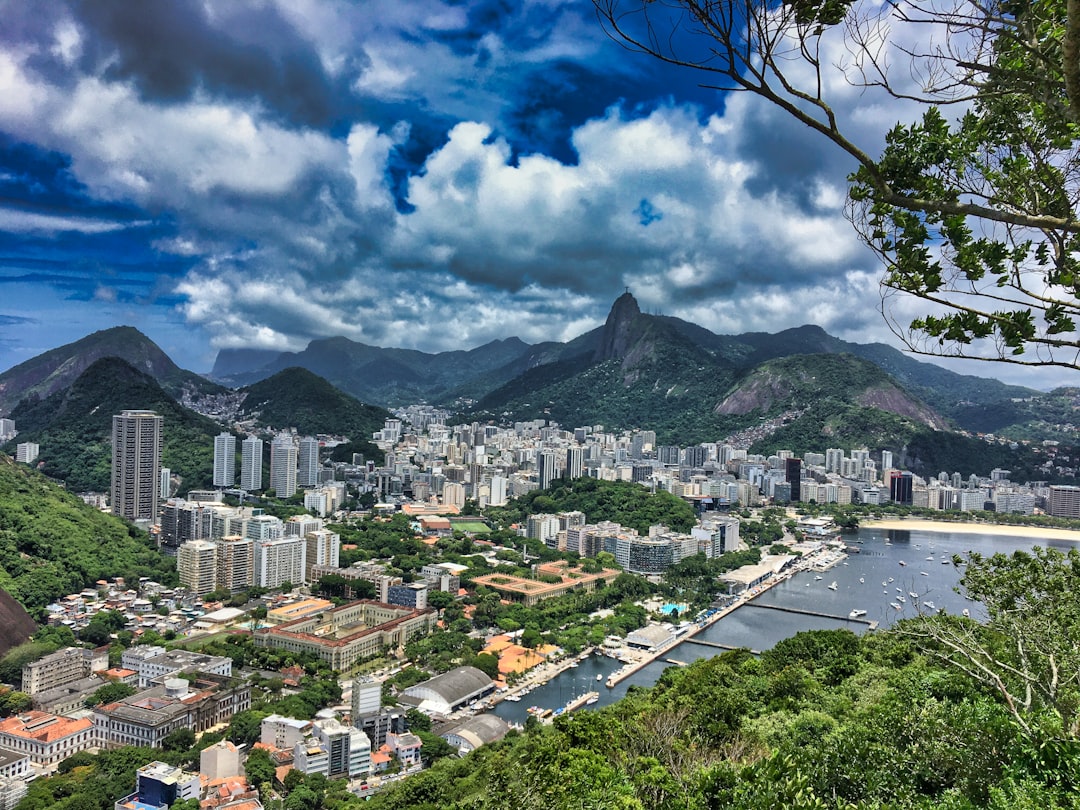
Photo by Antonella Vilardo on Unsplash
📬 Follow Easy Brazil Investing for more English-language coverage of Brazil’s best investment opportunities. Or follow us on X
Leave a Reply