
Opening Summary
Brazilian markets return from the Tiradentes holiday into a session dominated by external risk: renewed tension in the Middle East despite a temporary U.S.–Iran cease-fire, firmer oil prices, and shifting expectations for U.S. trade policy. Domestically, the focus is on the Ibovespa’s attempt to regain ground, the behavior of FX futures, and the continued rotation within Brazilian fixed income as some private credit funds dramatically underperform the CDI benchmark. On the corporate side, BB Seguridade pushes toward all-time highs, while the government continues to emphasize that improving macro data on inflation and employment has yet to translate into a strong feel‑good factor for the population.
For foreign investors, the key themes today are: (i) how geopolitical risk and oil prices are feeding into Brazilian equities and the real, (ii) the ongoing repricing in local credit and what it says about risk perception, (iii) the medium‑term energy transition opportunity highlighted by the potential solar expansion at Itaipu, and (iv) the political backdrop as President Lula seeks to bridge the gap between macro improvements and public sentiment. Intraday trading flows in mini‑contracts (mini Ibovespa and mini dollar) underscore a market still driven by global headlines, but Brazil’s structural stories—energy, financials, and social policy—remain central for longer‑term allocations.
Main News Stories
1. Global Risk: U.S.–Iran Truce Extension and Oil in Focus
Brazilian assets are trading today against a backdrop of renewed geopolitical tension, even as a cease-fire between the United States and Iran is formally extended. According to InfoMoney’s morning roundup (InfoMoney), the “truce” extension has calmed immediate fears of escalation, but the situation remains fragile, and oil prices continue to trade with a risk premium. This external environment is the main driver for risk assets globally, including Brazil.
U.S. equity futures are up in early trading after former President Donald Trump confirmed the extension of the cease-fire with Iran, as reported by “Futuros de NY avançam após Trump estender cessar-fogo com Irã” (InfoMoney). Investors are treating the move as a short‑term de‑escalation that reduces tail risk in the oil market and supports a mild risk‑on tone in global equities.
Why it matters for Brazil:
- Oil‑linked names: Higher or more volatile oil prices directly affect Petrobras and the broader Brazilian oil & gas chain. A sustained risk premium could support Petrobras’ cash flows but also revive political pressure over domestic fuel pricing.
- Risk sentiment: As a high‑beta emerging market, Brazil tends to amplify global risk‑on/risk‑off moves. A calmer Middle East backdrop supports flows into EM equities and FX, including the real.
- Trade balance: Brazil is a net exporter of commodities, including oil. Higher prices can improve the trade surplus, which is a key macro anchor for BRL, but also raise inflationary pressures via fuel and logistics costs.
InfoMoney’s broader highlight piece also notes that investors are monitoring Brazil’s trade balance data, which remains a critical buffer against external volatility. A robust surplus helps offset capital outflows when global risk aversion rises and reinforces Brazil’s relative resilience among EM peers.
2. Domestic Politics and Social Policy: Lula’s Message and Bolsa Família
Lula: Macro Improvements Are “Still Too Little” for the People
President Luiz Inácio Lula da Silva underscored the political challenge facing his administration: macro indicators are improving, but the population is not yet feeling a strong recovery. In “Lula enfatiza que dados bons de inflação e emprego ainda são pouco para o povo” (Money Times), Lula points out that lower inflation and better labor market data are positive, but still perceived as insufficient after years of high inflation, weak growth, and pandemic‑related hardship.
Investor angle: Lula’s comments matter because they hint at continued pressure for expansive social and investment programs, even as the government tries to maintain fiscal discipline. The administration has already pushed for increased spending on social transfers and public investment; if the perception persists that macro gains are not reaching the population, the political incentive for further spending could grow, potentially challenging Brazil’s new fiscal framework.
Bolsa Família Payments and Social Stability
On the social policy front, the flagship cash transfer program Bolsa Família continues its April 2026 payment cycle. As detailed by Estadão E‑Investidor’s explainer, payments are being made gradually according to the official calendar, with no interruption around the Tiradentes holiday. Bolsa Família is central to Lula’s social agenda and supports consumption at the bottom of the income distribution.
Why investors should care:
- Consumption impact: Stable and predictable Bolsa Família payments support demand for staples, low‑ticket retail, and basic services, benefiting sectors such as supermarkets, consumer goods, and some utilities.
- Fiscal trade‑offs: The program is relatively well‑targeted, but its expansion, combined with other social initiatives, must be weighed against the fiscal rule. Markets will keep monitoring whether social spending remains within the trajectory compatible with debt stabilization.
- Political capital: Maintaining the program’s credibility helps Lula’s popularity and reduces the risk of social unrest, which is constructive for the investment environment.
3. Markets Today: Ibovespa, Mini‑Index, and Mini‑Dollar
Ibovespa Returns from Holiday Under Geopolitical Shadow
After the Tiradentes holiday, the Ibovespa resumes trading today with external risk firmly on the radar. According to “Ibovespa hoje volta do feriado com tensão no Oriente Médio e petróleo no radar” (Estadão E‑Investidor), the benchmark index is reacting to developments in the Middle East, oil price movements, and global stock performance. The domestic agenda is relatively light in terms of economic data, which means international news and corporate flows are likely to dominate price action.
The article highlights that investors are also watching U.S. oil inventory data and broader global market sentiment. With no major local indicators, sector‑specific stories—such as financials, commodities, and utilities—are expected to drive dispersion within the index.
Mini‑Index: Attempted Rebound After Correction
In the derivatives market, the mini‑Ibovespa futures contract (WINM26) is trying to recover after a recent correction. InfoMoney’s technical analysis on WINM26 notes that the contract is testing key resistance levels after a downward move, with intraday traders watching support and resistance zones for potential short‑term trades.
For foreign investors, mini‑contracts are primarily a gauge of intraday sentiment and hedging activity rather than a direct investment vehicle, but they can indicate whether local participants are positioning for continuation of the rebound or expecting renewed weakness.
Mini‑Dollar: Continued Pressure on FX Futures
The mini‑dollar futures contract (WDOK26) remains under pressure, according to InfoMoney’s report on WDOK26. The article describes a scenario in which the dollar futures curve is influenced by global risk sentiment, expectations for U.S. interest rates, and Brazil’s own risk premium. Technically, the contract is trading near important support levels, with traders debating whether the recent appreciation of the real can sustain itself.
Implications for foreign investors:
- FX volatility: Persistent pressure in FX futures can signal that local players are hedging against BRL weakness, even if the spot market appears calmer. This matters for timing entries into BRL‑denominated assets.
- Carry vs. risk: Brazil still offers attractive nominal and real interest rates, but FX volatility can erode returns for unhedged foreign investors. Monitoring futures positioning helps assess the balance between carry and currency risk.
Day Trade Flows as Sentiment Barometer
InfoMoney’s daily day trade overview, “Day Trade hoje (22): Ibovespa sobe e testa retomada; veja minicontratos”, compiles support and resistance levels across mini‑index and mini‑dollar contracts. While aimed at short‑term traders, these reports provide a snapshot of where market participants expect near‑term inflection points, which can be useful for foreign investors managing tactical hedges or short‑term exposure.
4. Fixed Income and Credit: Private Credit Funds Underperform
A notable development in Brazil’s local asset management industry is the poor performance of certain private credit funds in early 2026. An analysis by Estadão E‑Investidor reveals that 20 private credit funds delivered only up to 28.4% of the CDI“20 fundos de crédito privado renderam apenas 28,4% do CDI no 1º trimestre — em um deles a cota caiu”, underscores the dispersion within a segment that many local investors had treated as a near‑cash alternative.
Context for foreign investors:
- CDI: The CDI (Certificado de Depósito Interbancário) is the main interbank rate and de facto benchmark for Brazilian fixed income. Most local fixed income funds are marketed in terms of “% of CDI”.
- Private credit funds: These funds invest in corporate credit (debentures, bank credit notes, receivables, etc.). Historically they were seen as relatively safe, but recent years have exposed credit events and liquidity risks, especially in funds with higher concentration or lower‑quality assets.
Why this matters:
- Repricing of credit risk: Underperformance suggests either credit events, widening spreads, or liquidity constraints. This repricing can spill over into corporate funding costs, affecting mid‑cap and high‑yield issuers in Brazil.
- Investor behavior: Local retail and high‑net‑worth investors may shift from private credit into government bonds or large‑cap equities, altering flows in local markets. For foreign investors, this can create opportunities in high‑quality credits trading at wider spreads.
- Systemic risk vs. idiosyncratic issues: So far, the problems appear concentrated in specific funds, but regulators and investors will watch for signs of broader stress in the credit market.
5. Corporate Spotlight: BB Seguridade Near Record Highs
In the corporate space, BB Seguridade (ticker: BBSE3), the insurance and pension arm of state‑controlled Banco do Brasil, is trading close to its historical peak. According to InfoMoney’s analysis, the stock is approaching its all‑time high, and technical analysts are mapping out potential upside targets if it breaks through resistance.
Drivers of the rally:
- High interest rates: Insurance and pension businesses benefit from higher yields on their investment portfolios, boosting financial income.
- Resilient earnings: BB Seguridade has historically delivered robust profitability and high dividend payouts, appealing to income‑oriented investors.
- Perceived lower political risk: Compared with other state‑influenced companies (such as Petrobras or Eletrobras), BB Seguridade is seen as less exposed to direct government interference in its commercial strategy.
For foreign investors, BBSE3 and its ADRs (if accessed via structured products or ETFs) represent a relatively defensive financial sector play with strong cash generation and dividends. The fact that the stock is near its historical high underscores the market’s preference for quality, cash‑rich names in a volatile macro environment.
6. Energy Transition: Solar Power at Itaipu
A strategic long‑term theme for Brazil is the expansion of renewable energy, and a new initiative at the Itaipu hydroelectric plant highlights the potential scale of this transition. As reported by Money Times in “Energia solar em Itaipu tem potencial para dobrar capacidade da usina”, the vast reservoir of the Itaipu plant on the Brazil–Paraguay border could host floating solar panels with the potential to double the plant’s generation capacity over time.
The reservoir spans about 1,300 square kilometers, with roughly 170 km of extension and an average width of 7 km. Deploying floating solar (“solar fotovoltaica flutuante”) on a portion of this area could add significant generation capacity without requiring new land, while also reducing evaporation and potentially improving the reservoir’s water management.
Investor implications:
- Renewables pipeline: Brazil is already a global leader in hydro and has rapidly expanded wind and solar. Large‑scale projects at existing reservoirs could further increase clean energy capacity at relatively low marginal cost.
- Opportunities in equipment and EPC: Companies involved in solar modules, inverters, floating structures, and engineering & construction could benefit from a pipeline of similar projects across Brazil’s many reservoirs.
- Regulatory and binational coordination: Itaipu is a binational entity (Brazil–Paraguay), so scaling this project will require regulatory coordination and long‑term contracts, which investors will monitor closely.
For foreign investors looking at Brazilian utilities and infrastructure, the Itaipu solar initiative is another data point supporting the thesis that Brazil will continue to be a major destination for energy transition capital, with relatively predictable regulatory frameworks compared to many emerging peers.
7. Global Backdrop: Trade Policy, Tech, and Defense
Several global stories covered by Brazilian outlets today also have indirect implications for Brazil.
- U.S. tariffs as the “new normal”: A PwC survey cited by InfoMoney shows that U.S. CEOs believe current tariffs will likely persist even after the Trump administration, suggesting that protectionist trade policy is becoming structural. See “CEOs dos EUA acreditam que tarifas continuarão mesmo após Trump, diz PwC” (InfoMoney). For Brazil, this environment creates both challenges and opportunities: challenges in accessing certain markets, but opportunities to position itself as an alternative supplier in global value chains, especially in agribusiness and some industrial segments.
- AI and defense: Another InfoMoney piece, “EUA enfrentam risco militar ao depender de empresas privadas para usar IA na defesa”, notes that the U.S. faces military risks by relying heavily on private tech firms for AI in defense, highlighted by a conflict with AI startup Anthropic. While not Brazil‑specific, this underscores the strategic importance of AI and defense technology—areas where Brazil is still nascent but where policy debates may intensify.
These global narratives shape the macro backdrop for Brazil, influencing trade flows, supply chains, and the positioning of multinational companies that operate in the country.
Market Context
Today’s news fits into several broader trends shaping the Brazilian investment landscape:
- External risk remains the main short‑term driver: The U.S.–Iran truce and oil prices dominate the immediate market narrative. Brazil’s sensitivity to global risk sentiment means that geopolitical headlines can overshadow local fundamentals on a day‑to‑day basis.
- Macro fundamentals improving, but perception lags: Lula’s comments about inflation and employment being “still too little” reflect a gap between macro data and household experience. For investors, this suggests that the government may continue pushing for policies to accelerate the transmission of growth to the broader population, with potential fiscal implications.
- Repricing of domestic risk assets: The underperformance of some private credit funds shows that investors are reassessing credit risk and liquidity. At the same time, quality equities like BB Seguridade are near record highs, reflecting a preference for strong balance sheets and predictable earnings.
- Structural energy and infrastructure story intact: Projects like the potential solar expansion at Itaipu reinforce the long‑term thesis of Brazil as a key player in global energy transition, with implications for utilities, equipment manufacturers, and green finance.
In this context, the Ibovespa’s attempt to rebound, the behavior of FX futures, and the performance of key sectors (financials, energy, utilities) are all part of a broader recalibration: investors are balancing short‑term geopolitical noise with Brazil’s medium‑term structural opportunities and domestic policy uncertainties.
Investment Implications
Brazilian Equities (B3) and ADRs
- Sector rotation: Oil‑linked names may see continued volatility as the Middle East situation evolves. Financials, particularly insurers like BB Seguridade, benefit from higher rates and defensive characteristics. Utilities and renewables stand to gain from the energy transition narrative reinforced by Itaipu’s solar potential.
- Quality bias: The stress in private credit funds underscores the value of strong balance sheets and transparent governance. Large, liquid names with solid cash generation are likely to remain favored, both on B3 and via ADRs.
- Domestic demand plays: Bolsa Família payments and a slowly improving labor market support lower‑income consumption. Retailers and consumer goods companies targeting this segment may benefit over time, though margins remain sensitive to interest rates and competition.
Brazilian Real (BRL)
- Short‑term drivers: BRL will continue to track global risk sentiment, especially around the Middle East and U.S. rates. Persistent pressure in mini‑dollar futures suggests local participants are cautious, even if spot remains relatively stable.
- Medium‑term anchors: A solid trade surplus, supported by commodities (including oil), and relatively high real interest rates provide support for the currency. However, any perception of fiscal slippage driven by expanded social or investment programs could weaken this anchor.
- Strategy: For foreign investors, partial or dynamic FX hedging remains prudent, especially for shorter‑horizon positions. Longer‑term investors may tolerate more FX risk given the carry and structural story.
Bonds and Local Fixed Income
- Government bonds: The repricing in private credit may push some local investors back into government bonds, supporting demand and potentially flattening parts of the curve, depending on fiscal news. For foreigners, local currency bonds still offer attractive real yields but come with FX risk.
- Corporate credit: The underperformance of certain private credit funds suggests opportunities for selective exposure to high‑quality issuers at wider spreads. Careful credit analysis is essential; broad‑based exposure via generic funds may not adequately differentiate risk.
- ESG and green bonds: The Itaipu solar initiative and broader energy transition could support issuance of green and sustainability‑linked bonds by utilities and infrastructure players, offering thematic opportunities.
Commodities Exposure
- Oil: Brazil’s oil exporters benefit from higher prices, but investors must weigh this against potential political interference in fuel pricing and Petrobras’ capital allocation. Global oil volatility will remain a key factor.
- Agribusiness: Persistent global trade tensions and tariffs may redirect demand to Brazilian exporters in certain markets. However, logistics, environmental scrutiny, and currency volatility remain key considerations.
- Energy transition: Solar and wind expansion, including projects like Itaipu’s floating solar, create opportunities across the value chain—equipment, engineering, utilities, and financing structures.
Looking Ahead
In the coming days, foreign investors should watch:
- Developments in the Middle East and oil prices: Any breakdown in the U.S.–Iran cease-fire or surprise moves in oil could quickly shift global risk appetite and directly affect Brazilian energy names and the real.
- Brazilian fiscal and political signals: Statements from Lula and his economic team regarding spending, the fiscal framework, and new social or investment programs will be scrutinized for their impact on debt dynamics and risk premia.
- Credit market data and fund flows: Additional disclosures about private credit funds and corporate credit conditions will help determine whether Q1 underperformance is idiosyncratic or symptomatic of broader stress.
- Energy and infrastructure announcements: Any concrete steps toward implementing solar at Itaipu or similar projects could catalyze interest in related sectors and ESG‑linked instruments.
- Macro data releases: Upcoming inflation prints, labor market data, and trade balance figures will shape expectations for the Central Bank’s policy path and influence both the yield curve and FX.
Overall, Brazil continues to present a mix of short‑term volatility driven by global events and long‑term opportunities anchored in its commodity base, energy transition potential, and large domestic market. For foreign investors, a selective, sector‑focused approach—paired with active management of FX and political risk—remains the most effective way to navigate Brazilian assets in this environment.
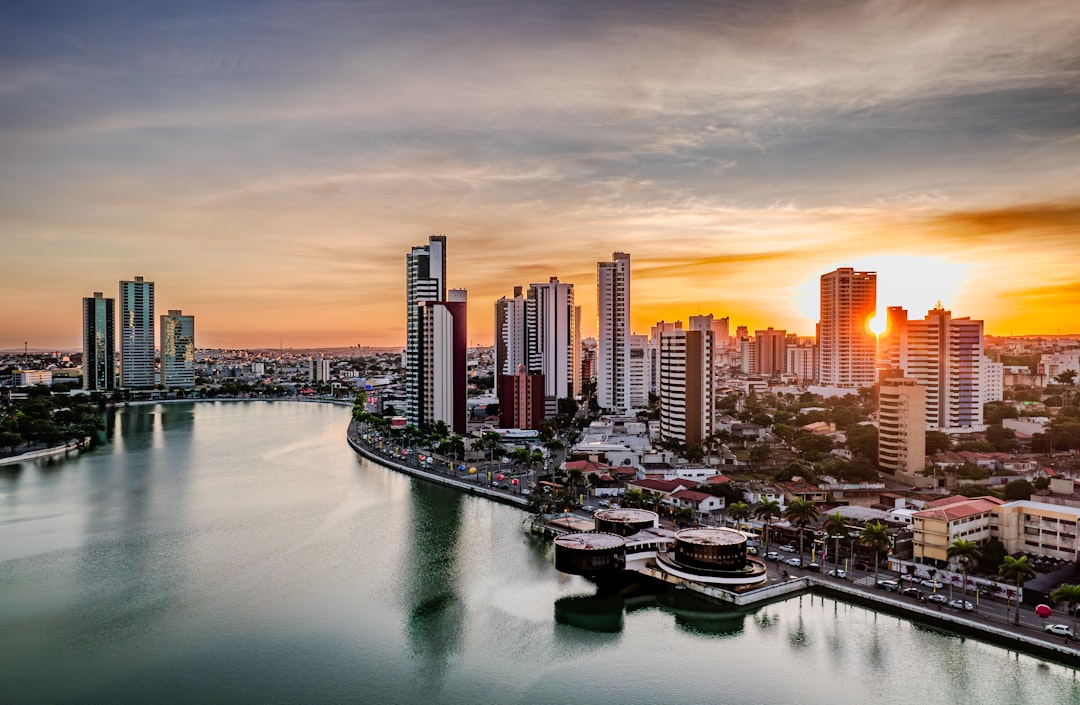
Photo by Edson Junior on Unsplash
📬 Follow Easy Brazil Investing for more English-language coverage of Brazil’s best investment opportunities. Or follow us on X
Leave a Reply