
Opening Summary
Brazil’s news flow on April 23, 2026, centers on three themes that matter directly to foreign investors: rising regulated energy prices, shifting dynamics in key commodity and infrastructure players, and a policy environment that is simultaneously supporting credit expansion while generating pockets of political and diplomatic noise.
On the macro side, the electricity regulator Aneel approved tariff hikes of 5%–15% for eight distributors, a move that feeds into inflation and interest-rate expectations. In the corporate arena, Samarco (the Vale/BHP joint venture) reported an 18% jump in iron ore pellet and fines output, while power utility Light is reshuffling its top management amid ongoing restructuring. On the policy and credit front, state-owned Caixa Econômica Federal started operating new, more generous financing conditions for the flagship low-income housing program Minha Casa, Minha Vida, with implications for construction, real estate, and banks. Global markets remain focused on oil prices and Middle East tensions, even as global equities hover near record highs, shaping the external backdrop for Brazilian assets.
Main News Stories
1. Energy Tariffs: Aneel Approves 5%–15% Increases
The National Electric Energy Agency (Aneel), Brazil’s federal regulator for electricity, approved new tariff adjustments for eight distribution companies, with increases ranging from about 5% to 15% that take effect this week. These tariff revisions are part of the annual readjustment process that reflects changes in energy purchase costs, transmission charges, sectoral funds, and inflation pass-through.
According to Aneel aprova altas de 5% a 15% nas tarifas de energia de 8 distribuidoras (Money Times), part of the increase relates to items that had been temporarily postponed in past cycles and are now being re-incorporated into the tariff structure. Regulators often smooth price changes to avoid abrupt shocks to consumers, but this can create a backlog that needs to be recovered later.
Why it matters for investors
- Inflation impact: Electricity is a significant component of Brazil’s consumer price indices. Tariff hikes of this magnitude for multiple distributors tend to push headline inflation higher over the coming months. That can influence expectations for the Selic policy rate and the central bank’s willingness to cut rates further.
- Utilities’ earnings visibility: For listed power companies, regulated tariff updates are a key driver of revenue. While the article does not list all eight distributors, any company whose concession is affected should see a relatively predictable uplift in top line. However, the net impact on profitability depends on how much of the cost increase is being passed through versus absorbed.
- Industrial and services costs: Higher electricity tariffs raise operating costs for energy-intensive sectors (metals, cement, chemicals, data centers, and large retail chains), which can pressure margins if companies cannot fully pass costs on to consumers.
Potential market impact
- Fixed income: A higher inflation path can lead to upward pressure on NTN-Bs (inflation-linked bonds) yields and may delay or reprice expectations for Selic cuts, affecting the entire local yield curve.
- Equities: Regulated utilities may benefit from clearer revenue trajectories, but sectors with high electricity intensity could see earnings downgrades if cost pass-through is limited.
- FX (BRL): If markets interpret the tariff hikes as meaningfully inflationary, they may price a more hawkish central bank stance, which can be mildly supportive for the real in the short term, though negative for growth-sensitive assets.
2. Commodities: Samarco Boosts Iron Ore Pellet Production
Samarco, the iron ore joint venture between Vale (VALE3) and BHP, reported a strong operational performance in Q1 2026. The company produced 3.8 million tonnes of iron ore pellets and fines, up 18% from the same period in 2025, according to its operational preview released on Wednesday.
The company is still in a long recovery process after the 2015 Fundão dam disaster in Mariana (Minas Gerais), which led to a prolonged shutdown and extensive legal and environmental liabilities. The latest data, reported by Samarco eleva em 18% produção de pelotas e finos de minério de ferro no 1º tri (Money Times), show that Samarco continues to ramp up operations within the constraints of its new environmental and regulatory framework.
Why it matters for investors
- Vale and BHP exposure: Samarco is not directly listed, but its performance contributes to the earnings and cash flows of its shareholders, Vale and BHP. As production normalizes, the JV can gradually move from being a liability-heavy asset to a more balanced contributor.
- Market for pellets: Iron ore pellets are higher value-added products compared to fines, used in more efficient and less polluting steelmaking processes. Global demand for pellets is structurally supported by decarbonization trends, especially in Europe and parts of Asia.
- Legal and ESG overhang: While operational numbers are improving, investors in Vale continue to monitor the resolution of Samarco-related legal cases and reparations. The company’s ability to generate cash from Samarco may influence the pace of settlements and provisions.
Potential market impact
- Vale (VALE3) and ADRs (VALE): Incremental production from Samarco can support Vale’s volumes and mix, especially in pellets, which typically carry higher margins. This may modestly support valuation if global iron ore prices remain favorable.
- Brazil’s trade balance: Higher iron ore exports contribute positively to Brazil’s current account, potentially supporting the BRL and reinforcing Brazil’s position as a key commodity exporter.
- ESG perception: Continued safe and compliant operation at Samarco is critical for rebuilding investor confidence in Vale’s ESG profile after past dam failures.
3. Housing and Credit: Caixa Implements New Minha Casa, Minha Vida Rules
Caixa Econômica Federal, Brazil’s large state-owned bank and the main operator of housing programs, began operating under new financing conditions for the government’s flagship social housing initiative, Minha Casa, Minha Vida (MCMV), as of Wednesday, April 22.
As reported by Caixa começa a operar novas condições de financiamento do Minha Casa, Minha Vida (Money Times), the new rules approved by the FGTS (Brazil’s severance fund) board and regulated by the Ministry of Cities include higher price caps for properties that can be financed under the program and adjusted conditions for different income brackets. MCMV targets mostly low- and lower-middle-income households and is a key driver of Brazil’s construction and affordable housing sectors.
Why it matters for investors
- Construction and real estate boost: Higher property price ceilings allow developers to sell more units under the program, expanding the addressable market for companies focused on popular housing. Listed builders with strong MCMV exposure (e.g., MRV, Direcional, Cury, Tenda) tend to benefit from such changes.
- Credit growth and public banks: Caixa’s expanded role in subsidized housing credit typically supports mortgage growth but can also raise concerns about credit risk and capital allocation, especially if conditions are highly concessional.
- Macro transmission: Housing construction has a high multiplier effect on employment and demand for materials (cement, steel, PVC, etc.), so easier access to subsidized mortgages can support domestic growth, albeit with fiscal and quasi-fiscal implications via FGTS and public banks.
Potential market impact
- Equities: Positive sentiment for homebuilders with MCMV exposure and for suppliers of building materials. Investors may also reassess the risk/return profile of Caixa’s listed peers (e.g., private banks) in light of potential competitive dynamics in mortgages.
- Fixed income and fiscal perception: While MCMV is largely funded via FGTS rather than the federal budget, any expansion of subsidized credit is watched by markets as part of Brazil’s broader fiscal and quasi-fiscal stance. Perception of policy-driven credit expansion can influence sovereign spreads.
- Social impact investing: For investors with ESG or impact mandates, the expansion of MCMV can be seen as a positive step in addressing Brazil’s housing deficit, potentially supporting allocations to related corporate issuers or infrastructure projects.
4. Corporate Governance and Financial Sector: Light and BRB Developments
4.1 Light Reshuffles Top Management
Electric utility Light, a key power distributor in Rio de Janeiro that has been undergoing financial restructuring, announced changes in its leadership, including a new CFO and a reorganization at both the holding company (Light S.A.) and its subsidiary Light Energia.
After an earlier miscommunication, the company clarified that the changes affect distinct levels of its structure. The updated report from Money Times, Light (LIGT3) troca diretor financeiro e reorganiza cúpula, notes that the management shake-up is part of efforts to strengthen governance and align the executive team with the company’s restructuring plans.
Why it matters for investors
- Restructuring credibility: Light has faced significant financial stress, including high losses from power theft (“gatos”) in its concession area and heavy debt. Management quality and alignment with creditors are critical for any successful turnaround.
- Regulatory and operational complexity: As an energy distributor in a challenging region, Light’s performance is highly sensitive to regulatory decisions, loss reduction initiatives, and capital structure management. Leadership changes can signal either renewed commitment to reform or internal instability.
Potential market impact
- LIGT3 (Light’s shares): Governance-related news can generate volatility. If investors perceive the new team as stronger and more credible, the stock may react positively; if seen as a sign of ongoing turmoil, it can weigh on valuation.
- Sector read-across: Other distribution utilities are less directly affected, but Light’s case illustrates the risk profile of concessions in high-loss areas and the importance of regulatory support.
4.2 Ex-President of BRB Changes Legal Strategy
In the financial sector, the former president of Banco de Brasília (BRB), Paulo Henrique Costa, has changed his legal defense team, choosing a lawyer with experience in plea bargains (“delações premiadas”), a mechanism widely used in Brazil’s anti-corruption investigations.
As reported by Ex-presidente do BRB troca defesa e escolhe advogado que atuou em delações premiadas (Money Times), the move suggests a potential shift in strategy in the ongoing investigations involving Costa. Details of the case and potential implications for BRB itself remain limited in the article.
Why it matters for investors
- Governance and political risk: BRB is a regional bank with ties to the Federal District government. Any corruption or governance-related investigations can raise concerns about risk management, political interference, and the robustness of internal controls.
- Precedent for public banks: Brazil has a history of political influence in state-controlled financial institutions. New cases can revive investor worries about the broader governance of public banks, even if BRB is relatively small compared to giants like Banco do Brasil or Caixa.
Potential market impact
- BRB securities: If new information emerges via plea bargains, BRB’s bonds or shares (if and where traded) could face pressure. For now, the impact is more reputational and speculative.
- Systemic perception: Investors in larger listed public banks will watch closely for any spillover or hints of broader issues, though nothing in today’s news suggests systemic risk.
5. Politics and Diplomacy: Lula’s Message to the U.S. and Marina’s Senate Bid
5.1 Lula Responds to U.S. Immigration Incident
President Luiz Inácio Lula da Silva publicly supported the decision by the head of Brazil’s Federal Police, Andrei Rodrigues, to revoke the diplomatic credentials of a U.S. immigration officer who was working at the Federal Police headquarters in Brasília. Lula framed the action as reciprocity, saying, “They did it to us; we’re going to do it to them,” referring to past U.S. actions.
The episode, covered by “Fizeram conosco, a gente vai fazer com eles”, diz Lula sobre EUA (Money Times), highlights a moment of friction in Brazil–U.S. relations, though at a relatively low diplomatic level.
Why it matters for investors
- Diplomatic tone: Brazil–U.S. relations are important for trade, investment, and cooperation in areas like security and climate. While this specific incident is minor, Lula’s rhetoric can influence perceptions of Brazil’s foreign policy alignment.
- Risk premium: Markets generally react more to structural policy moves (e.g., trade barriers, sanctions) than to rhetorical spats. However, a pattern of confrontational statements could, at the margin, affect investor sentiment regarding Brazil’s external environment.
Potential market impact
- Limited direct impact: Unless the spat escalates into concrete policy measures, the immediate market effect is likely negligible.
- Context for U.S. investors: U.S.-based investors should be aware of the political narrative, but there is no sign this will affect bilateral economic ties in the near term.
5.2 Marina Silva’s Senate Bid and São Paulo Politics
In São Paulo state politics, the Rede Sustentabilidade party formally endorsed former Environment Minister Marina Silva as a pre-candidate for the Senate and backed former Finance Minister Fernando Haddad (PT) as candidate for governor. In the same statement, the party criticized current governor Tarcísio de Freitas (Republicanos), calling his administration “disastrous.”
The development was reported by Rede Sustentabilidade endossa candidatura de Marina ao Senado e chama Tarcísio de “desastroso” (Money Times).
Why it matters for investors
- Environmental policy influence: Marina Silva is a prominent environmental figure. Her potential election to the Senate could strengthen the environmental and climate agenda in Congress, with implications for sectors such as agribusiness, mining, and infrastructure.
- São Paulo governance: São Paulo is Brazil’s economic engine. Political competition between Tarcísio (a pro-infrastructure, pro-privatization governor) and a PT-aligned coalition has implications for concessions, PPPs, and regulatory stability in the state.
Potential market impact
- Longer-term policy expectations: The immediate impact is limited, but investors with long-dated infrastructure or agribusiness exposure should track the evolving political landscape, especially as it relates to licensing, environmental enforcement, and concessions.
6. Global Backdrop: Oil, U.S. Data, and Risk Appetite
Brazilian assets trade within a global context that today features rising oil prices due to tensions involving Iran and the U.S., and continued strength in global equities despite geopolitical risks.
InfoMoney highlights that an impasse in negotiations between Iran and the U.S. is pushing oil prices higher and weighing on New York equity futures: Impasse nas negociações com o Irã eleva petróleo e derruba futuros de Nova York (InfoMoney). Another article notes that markets are also watching PMI data, U.S. jobless claims, and corporate earnings: PMIs, seguro-desemprego e balanços nos EUA e mais destaques desta 5ª (InfoMoney).
At the same time, Estadão’s E-Investidor discusses how global equities, including Brazil’s B3, are near record highs despite the war in the Middle East: Bolsas em máximas históricas: por que a guerra no Oriente Médio não derruba o mercado? (Estadão E-Investidor), and whether investors should buy at these levels or wait: Ibovespa nas máximas: investir agora ou esperar queda? (Estadão E-Investidor).
Why it matters for Brazil
- Oil and Petrobras: Higher oil prices tend to support Petrobras’ cash flows and Brazil’s oil trade balance, but they also feed into domestic fuel prices and inflation. Brazil’s partial fuel price liberalization means Petrobras has some discretion, but political pressure can distort pricing.
- Risk-on environment: Strong global risk appetite has helped push the Ibovespa to or near historical highs. This supports flows into Brazilian equities and credit but raises questions about valuations and the risk of a correction.
- U.S. rates and data: U.S. macro data and Fed expectations remain key drivers of EM currency and bond performance, including Brazil’s. Any upside surprise in U.S. inflation or growth could reprice global yields and pressure EM assets.
Market Context
Today’s Brazilian news fits into a broader pattern: the country remains a high-beta play on global risk appetite and commodities, while domestic policy is simultaneously trying to support growth (via housing and credit) and manage inflationary pressures (amid regulated price increases and external shocks like oil).
Key contextual points:
- Inflation vs. growth trade-off: Aneel’s energy tariff hikes and higher oil prices work in the direction of higher inflation. At the same time, expanded housing credit via Minha Casa, Minha Vida aims to stimulate growth and employment. The central bank must balance these forces when setting rates.
- Commodity leverage: Samarco’s output increase underscores Brazil’s leverage to the global steel and infrastructure cycle. Combined with oil dynamics, Brazil’s terms of trade remain a pivotal driver of the BRL and fiscal revenues.
- Governance and reform: Corporate governance changes at Light and legal developments around BRB reflect ongoing challenges in Brazil’s corporate and public-sector governance, even as many listed firms continue to improve standards.
- Political noise vs. policy continuity: Lula’s rhetorical jab at the U.S. and the emerging electoral dynamics in São Paulo show that political noise remains a feature of the Brazilian landscape. However, markets tend to focus more on concrete policy decisions than on isolated statements.
Investment Implications
Brazilian Equities (B3) and ADRs
- Utilities:
- Positive for distributors benefiting from Aneel’s tariff hikes, as revenue visibility improves. However, investors should monitor how much of the cost increase is fully passed through.
- Light (LIGT3) remains a special situation with high risk. Governance changes could be a catalyst in either direction depending on market perception of the new team.
- Commodities and Vale: Samarco’s 18% production increase is directionally positive for Vale (VALE3, VALE NYSE), particularly in pellets. Combined with resilient global iron ore demand, this supports the medium-term thesis, though ESG and legal risks remain.
- Construction and Real Estate: Companies focused on low-income housing stand to benefit from expanded MCMV financing conditions. For foreign investors, this segment offers exposure to domestic demand with policy tailwinds, but also policy risk if rules change again.
- Banks: Public banks (Caixa, BRB, Banco do Brasil) are in the spotlight for different reasons. Caixa’s role in subsidized housing and BRB’s legal headlines highlight the importance of governance and political risk assessment in financials.
- Petrobras and Oil Chain: Rising oil prices are supportive for Petrobras’ earnings and for oil service providers, but investors must weigh this against the risk of government interference in fuel pricing to contain inflation.
Brazilian Real (BRL)
- Supportive factors: Higher commodity prices (iron ore, oil) and stronger Samarco/Vale volumes support Brazil’s trade balance. A potentially more hawkish central bank stance in response to inflation pressures can also support the BRL.
- Headwinds: Political noise, concerns about quasi-fiscal expansion through housing programs, and any deterioration in global risk sentiment (e.g., from U.S. data or Middle East escalation) could weigh on the currency.
Brazilian Bonds
- Local rates: Aneel’s tariff hikes and oil-related inflation risks may push up inflation expectations, leading to higher real yields or at least slowing the decline in yields. Inflation-linked bonds (NTN-Bs) may see renewed interest.
- Sovereign credit: Expanded housing credit via FGTS and Caixa is not directly on the federal budget, but investors will watch the overall policy mix and any signs of fiscal slippage. For now, the moves are incremental rather than transformational.
- Corporate credit: Utilities with regulated revenue adjustments may be viewed more favorably in credit markets, while stressed names like Light remain high risk. Construction firms tied to MCMV may see improved cash flow visibility, supportive for their debt.
Commodities Exposure
- Iron ore and steel chain: Samarco’s ramp-up reinforces Brazil’s role as a key supplier of higher-value pellets. Investors with commodity baskets or direct exposure to Vale should factor in incremental volume and potential margin benefits.
- Oil: Higher oil prices, if sustained, support Petrobras and Brazil’s upstream sector, but also raise inflation and may prompt policy interventions. Investors in Brazil-focused commodity ETFs or structured products should monitor both the price and the political response.
Looking Ahead
Key items for foreign investors to watch in the coming days and weeks:
- Inflation data and central bank communication: How quickly Aneel’s tariff hikes and higher fuel prices show up in inflation prints will shape expectations for the Selic rate path. Any signaling from the Banco Central do Brasil about the balance between inflation and growth risks will be crucial.
- Details on MCMV implementation: Market participants will look for more granular data on loan volumes, default rates, and developer pipelines under the new Minha Casa, Minha Vida rules.
- Samarco and Vale disclosures: Further information on Samarco’s operational trajectory and any updates on legal settlements will be important for refining the Vale investment case.
- Light’s restructuring plan: Investors will watch for a clearer roadmap from the new management team, including negotiations with creditors and regulatory engagement.
- Global risk sentiment: U.S. PMIs, jobless claims, and corporate earnings, together with developments in the Middle East, will continue to set the tone for EM flows and valuations. Brazil, as a liquid EM market with high beta, will be particularly sensitive to any shift in global risk appetite.
- Political developments: While today’s diplomatic spat with the U.S. is minor, investors should keep an eye on Brazil’s foreign policy stance and on the evolving electoral landscape in key states like São Paulo, especially where it intersects with environmental and infrastructure policy.
Overall, Brazil remains an attractive but complex destination for foreign capital, with compelling opportunities in commodities, housing-related plays, and select utilities, balanced against inflation risks, governance issues, and the need to navigate an active political environment.
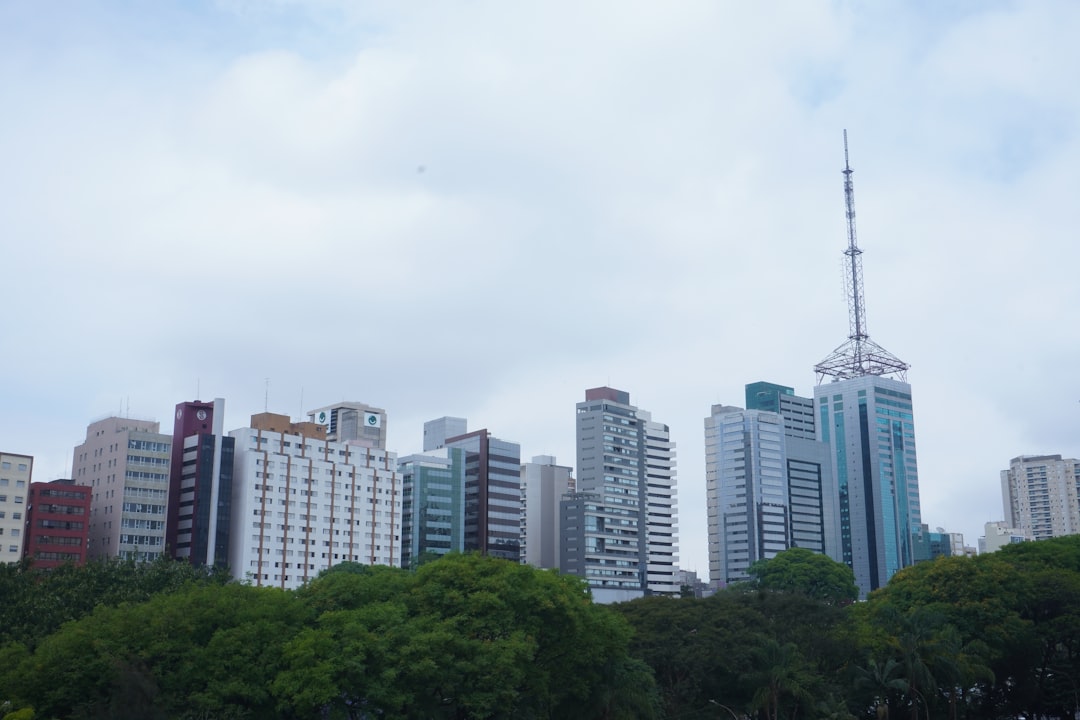
Photo by Vinícius Costa on Unsplash
📬 Follow Easy Brazil Investing for more English-language coverage of Brazil’s best investment opportunities. Or follow us on X
Leave a Reply