
Opening Summary
Brazilian markets enter Wednesday, August 5, 2026, in “wait-and-see” mode, with attention firmly on the Central Bank’s monetary policy decision and a heavy flow of corporate earnings. The day’s key drivers are the Copom (Brazil’s Monetary Policy Committee) meeting, global macro signals from the U.S. labor market and oil prices, and a notable corporate event: the public tender offer (OPA) for Brava (BRAV3) led by Colombia’s Ecopetrol. At the same time, foreign policy tensions with Argentina and deepening ties with Russia add a layer of geopolitical complexity that investors cannot ignore.
For foreign investors, the main themes to watch are: (1) the interest rate trajectory and its impact on equities, credit and FX; (2) sector-specific earnings signals from retail and banking; (3) the evolution of Brazil’s regional and global diplomatic posture—especially toward Argentina and Russia; and (4) commodity price volatility linked to negotiations between the United States and Iran. Together, these factors shape the risk-reward profile of Brazilian assets in the short and medium term.
Main News Stories
1. Monetary Policy and Global Macro Backdrop
The key domestic macro event today is the Copom meeting, where Brazil’s Central Bank decides the Selic rate (the benchmark interest rate). According to coverage from InfoMoney, markets are highly focused on whether the Bank will maintain its cautious stance or resume cuts in response to recent inflation and growth data. The decision comes as global investors digest U.S. employment figures, European price data and PMI (Purchasing Managers’ Index) readings across major economies. (Copom, emprego nos EUA, balanço do Bradesco e mais destaques desta quarta – InfoMoney)
Money Times reports that the Ibovespa, Brazil’s main equity index, is trading in line with expectations around the Copom decision, with intraday moves closely tracking any hint about the future rate path. In addition to local monetary policy, the index is reacting to services and composite PMI data from Brazil, Europe, the U.K., and the U.S., as well as the ADP employment report in the U.S. and producer price index (PPI) data from the Eurozone. (Tempo real: Ibovespa acompanha decisão do Copom – Money Times)
On the global side, InfoMoney notes that Dow Jones futures are up on hopes of a diplomatic agreement between the U.S. and Iran and renewed optimism around artificial intelligence (AI)-linked equities. The prospect of a deal that could end hostilities and reopen traffic through the strategically crucial Strait of Hormuz is easing some risk aversion in global markets. (Dow Jones Futuro sobe com esperança de acordo entre EUA e Irã e otimismo com IA – InfoMoney)
Why it matters for investors
- Interest rates and equity valuations: Brazil’s Selic rate is central to equity valuations, especially in interest-sensitive sectors like utilities, real estate, and consumer discretionary. A more hawkish Copom stance supports the Real (BRL) but can weigh on growth stocks; a dovish tilt tends to favor risk assets but can raise FX volatility.
- Global risk sentiment: Better U.S. labor data and AI optimism support risk-on positioning globally, potentially benefiting emerging market flows into Brazil. Conversely, any disappointment in macro data could reinforce defensive positioning.
- Cross-asset implications: If the Copom signals a prolonged period of high rates, local bonds may remain attractive to carry traders, while leveraged equity and credit strategies may need to be reassessed.
2. Corporate Actions: Ecopetrol’s Tender Offer for Brava (BRAV3)
One of the most important corporate events today is the OPA (Oferta Pública de Aquisição)CVM (Comissão de Valores Mobiliários, Brazil’s securities regulator), Colombia’s state-owned oil company Ecopetrol is proceeding with its bid to acquire 116.1 million Brava shares, equivalent to roughly 25% of the company’s capital.
Ecopetrol already has agreements to purchase additional shares via prior contracts, and the OPA is designed to consolidate a significant minority stake. The auction is being held on the B3 (São Paulo stock exchange) today, and will define the new ownership structure and potentially the future corporate strategy for Brava. (Leilão de OPA da Brava (BRAV3) ocorre nesta quarta (5); o que muda para o investidor? – Money Times)
Why it matters for investors
- Foreign strategic capital: Ecopetrol’s move underscores continued interest from Latin American state-owned energy companies in Brazilian assets. This can be seen as a vote of confidence in Brazil’s regulatory and infrastructure environment.
- Corporate governance and liquidity: A successful OPA can improve governance (if a strong strategic investor takes an active role) but may also reduce free float if shares are concentrated. Investors should watch for changes in Brava’s board composition and strategic plan.
- Regulatory risk: The CVM’s earlier intervention shows that Brazilian regulators remain active in monitoring minority shareholder protections and deal fairness—important for foreign investors assessing legal risk.
3. Earnings Watch: GPA (PCAR3) Deepens Losses
In the retail sector, supermarket chain GPA (PCAR3), owner of the Pão de Açúcar banner, reported a larger loss in Q2 2026. Money Times reports that GPA posted a net loss of R$ 204 million, an increase of 15.5% compared to the negative result a year earlier. The company’s adjusted EBITDA (earnings before interest, taxes, depreciation and amortization) also deteriorated, signaling ongoing operational challenges in a competitive, low-margin sector. (GPA (PCAR3) eleva prejuízo em 15,5% no 2º trimestre – Money Times)
The results point to pressure from intense competition, cost inflation (especially labor and logistics), and possibly weak consumer demand in some segments. For a company that has undergone multiple restructuring efforts in recent years, the continued losses raise questions about its ability to generate sustainable returns and maintain market share.
Why it matters for investors
- Consumer health signal: Supermarket earnings are a useful proxy for consumer purchasing power and cost pressures. GPA’s weak numbers may reflect a still-fragile consumption environment in parts of Brazil.
- Sector differentiation: Investors may increasingly favor better-positioned food retailers and cash-and-carry chains over traditional supermarkets that struggle with cost control and pricing power.
- Restructuring risk: Persistent losses increase the likelihood of asset sales, capital raises or further restructuring at GPA. Equity holders face dilution risk if new capital is needed.
4. Commodities: Oil Prices React to U.S.–Iran Negotiations
On the commodities front, Money Times reports that Brent crude futures are trading higher today amid volatile negotiations between the U.S. and Iran. Markets are watching closely to see whether efforts to end the war and restore shipping through the Strait of Hormuz—a vital chokepoint for global oil flows—are making progress. Brent prices are up as traders price in both the risk of prolonged disruption and the possibility of a sudden normalization if a deal is reached. (Petróleo sobe enquanto investidores aguardam desfecho das negociações entre EUA e Irã – Money Times)
Separately, Brazil 247 cites Reuters reporting that the U.S. has nearly depleted its stock of long-range missiles after the conflict with Iran, raising broader concerns about American military capacity in potential future conflicts with Russia or China. While this is primarily a strategic defense issue, it has indirect implications for global risk perception and energy markets. (EUA esgotaram quase todo o estoque de mísseis de longo alcance após guerra contra o Irã, diz Reuters – Brasil 247)
Why it matters for investors
- Brazil’s oil sector: Higher Brent prices generally support profitability and cash flow for Brazilian oil producers, especially Petrobras, and for offshore service providers. However, volatility can complicate hedging and investment planning.
- Macro and inflation: Rising oil prices can feed into Brazil’s inflation via fuel costs, influencing Copom decisions and the broader rate environment.
- Geopolitical risk premium: The combination of Middle Eastern tensions and questions about U.S. military stockpiles may sustain a risk premium in energy and defense-related assets globally.
5. Geopolitics and Diplomacy: Argentina Tensions and Russia Rapprochement
Brazil–Argentina Relations Cool Further
Diplomatic tensions between Brazil and Argentina have escalated. Money Times, citing Reuters, reports that Brazil’s ambassador to Argentina, Julio Bitelli, will not return to Buenos Aires as long as Argentine President Javier Milei continues his public attacks on President Luiz Inácio Lula da Silva. Brazil has effectively downgraded the level of representation with Argentina, and the Argentine ambassador in Brasília, Daniel Raimondi, has been called in by Brazil’s Foreign Ministry (Itamaraty) for explanations. (Embaixador brasileiro não voltará à Argentina… – Money Times)
A commentary piece in Brasil 247 argues that Itamaraty’s decisions are “correct and pedagogical,” emphasizing that Brazil will not maintain high-level relations with leaders it characterizes as “fascists.” While opinionated, the article reflects a broader hardening of Brazilian official rhetoric toward Milei’s administration. (Decisões do Itamaraty sobre a Argentina… – Brasil 247)
Brazil–Russia Cooperation Deepens
In parallel, Brazil is strengthening ties with Russia. Brasil 247 reports that Russian presidential adviser Nikolay Patrushev is visiting Brazil and has warned that oceans are once again becoming arenas for geopolitical rivalry, calling for strategic cooperation between Moscow and Brasília in maritime security and other areas. (Oceanos voltam a ser palco de rivalidades geopolíticas… – Brasil 247)
Another article details a meeting between President Lula and Patrushev, where they discussed international security, maritime collaboration, scientific research, and strengthening bilateral relations. This fits within Brazil’s broader foreign policy of diversifying partnerships beyond the traditional Western sphere, including within BRICS. (Lula e assessor presidencial russo discutem segurança internacional… – Brasil 247)
Additionally, a Russian university—Patrice Lumumba—has opened applications for Brazilian and Latin American students across more than 500 courses, signaling efforts to deepen educational and cultural ties with the region. (Universidade russa abre inscrições… – Brasil 247)
Why it matters for investors
- Regional trade risk: Argentina is a major trade partner and a key member of Mercosur. Sustained diplomatic tension could complicate trade negotiations, cross-border investments, and regulatory coordination in sectors like energy, automotive and agriculture.
- Geopolitical alignment: Brazil’s closer engagement with Russia may affect perceptions in Washington and Brussels, with potential implications for sanctions risk, defense cooperation, and technology transfers over the medium term.
- Currency and risk premium: Heightened geopolitical friction in South America can increase risk premiums on regional assets, potentially impacting FX volatility and sovereign spreads.
6. Other Political and Social Developments
On the domestic political front, Brasil 247 reports that Marcola, a former adviser, may leave President Lula’s re-election campaign after being cited in a report concerning a loan that has already been repaid. The potential move appears aimed at avoiding political damage to the campaign. (Marcola pode deixar a campanha à reeleição do presidente Lula – Brasil 247)
While this is more of a campaign management issue than a structural political risk, foreign investors should follow any developments that could affect Lula’s approval ratings or the reform agenda, particularly in areas such as fiscal policy, tax reform, and state-owned enterprise governance.
Market Context
Taken together, today’s news flow highlights a Brazilian market at the intersection of domestic monetary policy, corporate restructuring, and complex geopolitics.
On the macro side, the Copom decision is the central pivot. Brazil has been balancing inflation control with a desire to support growth. High real interest rates have historically attracted foreign capital into local bonds and the currency, but they also tend to suppress equity valuations and credit expansion. The current environment—marked by mixed global data and uncertainty around oil prices—makes the Copom’s communication particularly important.
At the corporate level, the Ecopetrol–Brava OPA showcases ongoing foreign interest in Brazilian infrastructure and energy assets, even as some domestic players like GPA struggle. This divergence underscores the need for stock-by-stock analysis rather than broad sector bets, especially within consumer and retail.
On the geopolitical front, Brazil’s assertive stance toward Argentina and its engagement with Russia reflect an increasingly independent foreign policy. While this can enhance Brazil’s leverage in multilateral forums, it also introduces uncertainty for investors who prefer predictable alignment with Western economic and security structures.
Investment Implications
Brazilian Equities (B3)
- Rate-sensitive sectors: Utilities, real estate, and high-growth tech names will react strongly to any surprise from Copom. A more dovish signal could trigger a relief rally; a hawkish tone may prompt rotation into defensives and high-dividend plays.
- Financials: Bank earnings (including Bradesco’s, mentioned in the InfoMoney roundup) and rate decisions jointly shape the outlook for financial stocks. Higher rates support net interest margins but can pressure credit quality and loan growth.
- Consumer and retail: GPA’s weak results highlight the need for selectivity. Investors may favor chains with strong cost control, exposure to higher-income consumers, or cash-and-carry models that benefit from trading-down behavior.
- Energy and infrastructure: The Brava OPA suggests ongoing M&A interest. Investors might look for
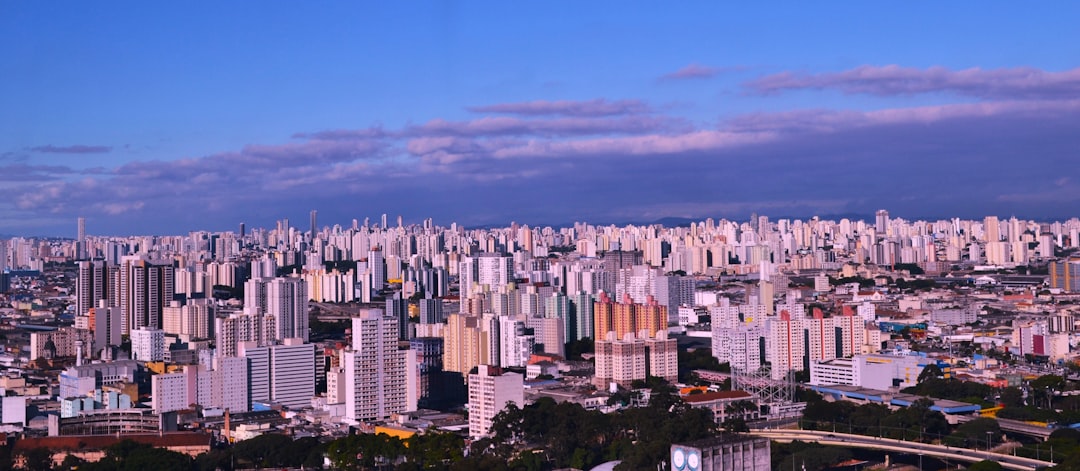
Photo by Joao Alves on Unsplash
📬 Follow Easy Brazil Investing for more English-language coverage of Brazil’s best investment opportunities. Or follow us on X
Leave a Reply