
Opening Summary
Brazilian political risk, institutional modernization, and global geopolitical tensions dominate today’s news flow relevant for foreign investors. On the domestic front, the Bolsonaro camp is back at the center of attention, both for its renewed rhetorical escalation and for the controversial use of generative AI in party conventions. At the same time, Brazil’s state-controlled oil giant Petrobras is again in the spotlight as a driver of regional industrial policy, with new emphasis on natural gas–based development in the Northeast.
Globally, stories on Russia’s nuclear posture, China’s human-capital strategy, US–Iran tensions, Israel–Palestine, UN reform debates, and Venezuela’s withdrawal from the International Criminal Court (ICC) all feed into the broader risk environment that shapes emerging-market asset pricing, including Brazil. Domestically, an important micro—but very real—reform in the standardization of property registries promises to reduce friction in Brazil’s credit markets. Investors should watch: (1) the evolving Bolsonaro–Lula political dynamic ahead of the 2026 cycle; (2) the policy direction of Petrobras and its implications for energy, fertilizer, and industrial equities; and (3) how global geopolitical stress interacts with risk appetite for Brazilian assets.
Main News Stories
1. Bolsonaro, AI, and the Re-Heating of Political Risk
1.1 Judicial tension and Bolsonaro’s defiant posture
A commentary in Brasil 247 highlights that former president Jair Bolsonaro has “never treated a judicial order as a definitive limit,” emphasizing his history of pushing institutional boundaries and testing the resilience of Brazil’s courts and electoral authorities. The article frames Bolsonaro’s conduct as a persistent challenge to the rule of law and notes that recent episodes reinforce the perception that he and his allies see judicial constraints as political obstacles rather than legal red lines. (Quousque tandem, abutere, Bolsonaro, patientia nostra? – Brasil 247)
Why it matters for investors:
- Brazil’s risk premium (CDS spreads, equity discount rates) is highly sensitive to perceived institutional stability. Any narrative suggesting renewed confrontation between Bolsonaro-aligned forces and the judiciary increases tail risk of institutional stress.
- For foreign investors, this revives memories of 2022’s pre-election tensions and the January 8, 2023 Brasília riots, events that temporarily raised volatility in Brazilian assets.
Potential market impact:
- In the near term, this is more about sentiment than fundamentals. If rhetoric escalates into concrete institutional clashes (e.g., open defiance of Supreme Court decisions), expect:
- BRL weakness vs. USD as political-risk premia widen.
- Underperformance of domestically oriented small caps and state-controlled companies, which are perceived as more exposed to political interference.
1.2 AI-generated Bolsonaro at PL convention and legal response
InfoMoney reports that a federal congresswoman has petitioned the Prosecutor General’s Office (PGR) over the use of an AI-generated video of Jair Bolsonaro at the Liberal Party (PL) convention. The video showed a digital avatar of Bolsonaro speaking to the audience, despite his legal and political constraints. The complaint argues this may constitute misuse of AI tools in political communication and potentially violate electoral or communication rules. (Deputada aciona PGR por vídeo de Bolsonaro feito com IA na convenção do PL – InfoMoney)
This incident is also referenced in a Brasil 247 blog piece that describes the PL convention as a “circus” whose highlight was Bolsonaro’s avatar on the big screen, underscoring the symbolic and communicational impact of the event on the right-wing base. (Constrangimento do 01 à esquerda – Brasil 247)
Why it matters for investors:
- Brazil is emerging as a test case for AI regulation in political campaigns. Legal responses to this episode could set precedents affecting:
- Media and tech companies operating in Brazil (compliance costs, liability frameworks).
- Market perception of regulatory risk in digital platforms and advertising.
- More broadly, the episode signals that Bolsonaro’s camp remains highly active in mobilizing its base, which will shape the political environment heading into municipal elections (2024/2025) and the 2026 presidential race.
Potential market impact:
- Short term: limited direct impact. However, if this triggers a broader regulatory push on AI and social media, it could affect valuations of listed Brazilian tech and media players, particularly those reliant on political advertising or user-generated content.
1.3 Flávio Bolsonaro’s rhetoric shifts back to “Bolsonaro classic”
InfoMoney analyzes a notable shift in Senator Flávio Bolsonaro’s communication strategy. After a period trying to broaden his electoral appeal with a more moderate tone, Flávio has returned to rhetoric closely aligned with his father’s confrontational style. This includes sharper criticism of the Lula government and more explicit alignment with conservative cultural and security themes. (Por que Flávio Bolsonaro voltou a falar como Jair Bolsonaro – InfoMoney)
Why it matters for investors:
- This reinforces the view that the 2026 presidential contest is likely to be polarized between Lula-aligned and Bolsonaro-aligned forces, with limited space for centrist “third way” candidates.
- Polarization tends to:
- Increase policy uncertainty, especially around fiscal rules, privatizations, and regulatory frameworks.
- Heighten volatility around election cycles, impacting timing of IPOs, M&A, and investment decisions.
Potential market impact:
- Over the medium term, a more polarized race may:
- Keep risk premia elevated vs. peers if investors anticipate policy swings depending on electoral outcomes.
- Influence the pricing of utilities, banks, and state-controlled firms, which are more sensitive to political shifts.
1.4 “Third way” still in play, according to left-wing analyst
In an interview with Brasil 247, leftist political figure Rui Costa Pimenta argues that Brazil’s “dominant class” (the economic elite) is still attempting to construct a “third way” alternative to both President Lula and Bolsonaro-aligned candidates such as Flávio Bolsonaro. He claims that neither current option fully satisfies the preferences of the business elite, who would prefer a more orthodox, market-friendly candidate. (Classe dominante ainda tenta criar terceira via contra Lula e Flávio Bolsonaro – Brasil 247)
Why it matters for investors:
- While this is a political reading from the left, it highlights a real debate: the business sector’s search for a stable, fiscally conservative, pro-reform candidate. If such a figure gains traction, it could:
- Lower long-term risk premia.
- Support cyclical sectors (banks, domestic consumption) on expectations of more predictable macro policy.
2. Petrobras, Sergipe, and Brazil’s Industrial Strategy
2.1 Petrobras as anchor of Sergipe’s transformation
In an interview with Brasil 247, Senator Rogério Carvalho emphasizes that Petrobras is the “base of the transformation” of the state of Sergipe in Brazil’s Northeast. He highlights the strategic use of natural gas resources in the region to reduce Brazil’s dependence on imported agricultural inputs—fertilizers and other crucial inputs of which Brazil currently imports more than 80% of its needs. The vision is to leverage Sergipe’s gas to support domestic fertilizer production and broader industrial development. (Petrobras é a base da transformação de Sergipe, afirma Rogério Carvalho – Brasil 247)
Why it matters for investors:
- Petrobras (PETR3, PETR4; NYSE: PBR) remains central to Brazil’s industrial and energy policy. This interview reinforces:
- The government’s intent to use Petrobras as a development tool, particularly in gas and downstream segments.
- A strategy of import substitution in fertilizers, which has implications for:
- Domestic fertilizer producers and chemical companies.
- Agribusiness margins (if domestic supply reduces price volatility).
- For the Northeast, gas-led industrialization could:
- Boost regional growth, infrastructure investment, and employment.
- Create opportunities in logistics, power generation, and industrial parks.
Potential market impact:
- Petrobras: Increased emphasis on gas and downstream projects may:
- Support capex growth, potentially reducing free cash flow available for dividends if not offset by higher cash generation.
- Raise concerns among some investors about political influence and return-on-investment discipline.
- Agribusiness & fertilizers: If policy execution is credible, local fertilizer/chemical names could benefit from:
- Improved feedstock availability (gas).
- Policy support, including potential tax incentives or financing.
3. Institutional Modernization: Property Registry Reform
3.1 Standardization of real estate registries to speed up financing
InfoMoney reports on a modernization initiative that standardizes property registry processes across Brazil. The reform aims to make the registration of real estate financing faster and more efficient by harmonizing documentation, procedures, and digital tools for notaries and registries. The goal is to reduce bureaucratic delays that often slow down mortgage approvals and property transactions. (Padronização dos registros de imóveis vai deixar registro de financiamento mais ágil – InfoMoney)
Why it matters for investors:
- Brazil’s real estate and credit markets have long been hampered by slow, fragmented, and paper-intensive property registration systems. Standardization can:
- Reduce transaction times and legal uncertainty.
- Lower operational costs for banks and fintechs in mortgage origination.
- Improve collateral quality and enforceability, key for credit expansion.
- For foreign investors, this is a structural positive for:
- Banks and mortgage lenders (higher volumes, lower back-office costs).
- Real estate developers (faster sales conversion, less working capital tied up).
- REITs (FIIs – Fundos de Investimento Imobiliário) and real estate–linked securities, as improved legal infrastructure supports securitization.
Potential market impact:
- Over time, this reform can contribute to:
- Lower spreads in mortgage lending as legal and operational risk declines.
- Increased credit penetration, supporting construction and homebuilding cycles.
- Short term, the reform is more of a medium-term structural driver than an immediate market-moving event, but it adds to the narrative of gradual institutional improvement in Brazil’s business environment.
4. Global Geopolitics and Brazil’s External Environment
4.1 Russia’s navy and nuclear posture
Brasil 247 reports that Russian President Vladimir Putin has stated that Russia’s navy is reinforcing the country’s nuclear capabilities. He assigned the navy a strategic role in defending Russian territory and protecting its interests beyond its borders, underscoring continued modernization of nuclear and naval assets. (Putin afirma que Marinha da Rússia reforça poder nuclear – Brasil 247)
Why it matters for investors:
- This adds to the broader geopolitical risk environment, particularly:
- Energy markets (Russia is a major oil and gas producer).
- Global risk sentiment and safe-haven flows.
- For Brazil, heightened tensions involving Russia can:
- Support commodity prices (oil, gas, some agricultural commodities) if supply disruptions are feared.
- Influence Brazil’s diplomatic positioning, given its BRICS ties and non-aligned stance, which can affect trade and investment relations.
4.2 US–Iran tensions: pause in attacks after escalation concerns
Another Brasil 247 piece notes that the United States conducted airstrikes against Iranian targets for 13 consecutive days before pausing operations after warnings from US political figures, including Senator J.D. Vance, about the risks of military escalation. The pause suggests internal debate in Washington over how far to go in confronting Iran. (EUA pausam ataques ao Irã após alertas de Vance sobre riscos da escalada militar – Brasil 247)
Why it matters for investors:
- US–Iran tensions are closely linked to:
- Global oil supply routes (e.g., Strait of Hormuz).
- Risk premia in energy markets.
- For Brazil:
- Higher oil prices generally benefit Petrobras and Brazil’s oil sector, but can pressure domestic inflation and fuel price policy debates.
- Volatile global risk sentiment can affect capital flows into emerging markets, including Brazil.
4.3 Israel–Palestine: ongoing conflict and global governance debates
Brasil 247 reports that Israeli forces killed five Palestinians in Gaza and arrested 70 people in the West Bank, in operations ordered by Prime Minister Benjamin Netanyahu and Defense Minister Israel Katz. (Israel assassina cinco palestinos em Gaza e prende 70 na Cisjordânia – Brasil 247)
In a related global-governance context, Henry Huiyao Wang, president of the Center for China and Globalization, argues that UN reform is essential to avoid paralysis of the Security Council. He advocates expanding representation, limiting veto powers, and strengthening global governance in light of crises in Gaza and Ukraine. (Reforma da ONU é essencial para evitar paralisia do Conselho de Segurança – Brasil 247)
Why it matters for investors:
- Persistent conflict in the Middle East contributes to:
- Higher geopolitical risk premia.
- Potential disruptions in energy and trade routes.
- UN reform debates reflect a shifting global order, in which:
- Emerging economies like Brazil seek greater influence.
- Global governance structures may evolve, affecting multilateral financing, sanctions regimes, and trade rules.
- Brazil’s diplomatic positioning (e.g.,
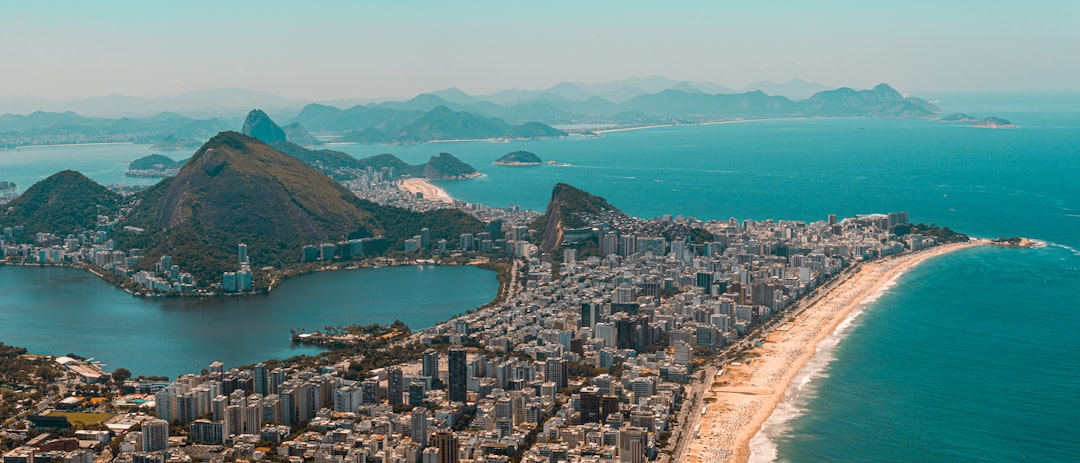
Photo by Maycon Mansur on Unsplash
📬 Follow Easy Brazil Investing for more English-language coverage of Brazil’s best investment opportunities. Or follow us on X
Leave a Reply