
Opening Summary
Brazilian assets open the week under the dual influence of a highly polarized presidential race and a heavy macro data calendar. The first round of the 2026 elections has delivered the narrowest first-round gap in modern Brazilian history between incumbent President Luiz Inácio Lula da Silva and Senator Flávio Bolsonaro, setting up a razor-thin runoff that markets currently perceive as tilting slightly toward the opposition candidate.
At the same time, global risk sentiment remains anchored to U.S. interest rate expectations and incoming activity data, while local investors digest fresh PMI (Purchasing Managers’ Index) readings and the weekly Focus survey of economists. For foreign investors, the key themes today are: (1) how markets are repricing Brazilian political risk after Flávio Bolsonaro outperformed polls; (2) what the evolving composition of Congress implies for reform capacity; and (3) how global oil and U.S. rates dynamics intersect with Brazilian equities, FX, and fixed income.
Main News Stories
1. Elections 2026: Flávio vs. Lula in the Tightest Runoff Ever
The central story for Brazilian markets today is the first-round result of the 2026 presidential election, and the immediate market reaction.
Flávio Bolsonaro edges Lula in first round
With 100% of ballots counted, Senator Flávio Bolsonaro (PL – Liberal Party) finished the first round slightly ahead of President Lula (PT – Workers’ Party), in what is being described as the closest first-round presidential result since Brazil’s return to democracy. According to Money Times, Flávio received 56,104,503 votes, while Lula secured 53 million-plus votes (exact figure not yet reported in the summary, but implying a gap of roughly 3 million votes).
This outcome contradicts much of the pre-election polling, which had generally shown Lula leading or at least neck-and-neck with Flávio. The surprise upside for Flávio is being interpreted as a signal that right-wing momentum remains strong, particularly in key states such as São Paulo and parts of the Southeast and Midwest.
Why it matters for investors:
- Policy direction: Markets typically see the Bolsonaro family and their allies as more market-friendly on fiscal and structural reforms (privatization, deregulation), though with some institutional risk concerns. Lula, in his current term, has been associated with a more expansive fiscal stance and stronger role for the state in the economy.
- Repricing of political risk: The first-round surprise reduces the probability of a Lula landslide and increases the probability of a right-of-center administration from 2027 onward. This tends to support equities, especially state-controlled companies, and the BRL in the short term.
- Runoff uncertainty: The narrow margin implies an extremely contentious second round, which can increase volatility in FX and rates as polls and campaign events swing expectations.
Analysts interviewed by Reuters, as reported by Money Times, expect Brazilian markets to open higher on Monday (Oct 5) in response to Flávio’s outperformance versus polls. The logic: reduced odds of a more interventionist policy mix and increased chance of a more orthodox economic team if Flávio wins.
Market reaction: relief rally expected
The anticipated “relief rally” is likely to be most visible in:
- Equities: State-owned enterprises (SOEs) such as Petrobras and Banco do Brasil often react positively when the market prices in a more market-friendly administration. Cyclical sectors tied to domestic demand may also benefit if risk premia compress.
- FX: The Brazilian real (BRL) tends to appreciate when political risk declines or when markets anticipate fiscal consolidation. A stronger BRL can, in turn, ease imported inflation pressures.
- Rates: Long-dated local bonds may rally if investors expect a more conservative fiscal stance, reducing the risk premium embedded in the yield curve.
However, the runoff remains too close to call, and any early rally could be reversed if polls tighten or if political rhetoric escalates. Volatility around political headlines will likely remain elevated through the second-round vote.
2. Political Landscape: Congress, Parties, and Campaign Strategies
Beyond the presidential race, several political developments shape the broader policy environment, particularly the composition of Congress and the strategies of both campaigns heading into the runoff.
PSOL below the “cláusula de barreira” (electoral threshold)
The left-wing party PSOL (Partido Socialismo e Liberdade), even in federation with the centrist-leaning Rede, failed to meet Brazil’s “cláusula de barreira” (electoral threshold) in nine states, according to Brasil 247. The threshold is a rule that sets minimum performance criteria for parties (in terms of votes or seats) to access public funding (Fundo Partidário) and free TV/radio campaign time.
Why it matters:
- Funding and visibility: Failing the threshold jeopardizes PSOL’s access to public funds and free propaganda from 2027, potentially weakening one of the main left-wing forces to the left of the PT.
- Fragmentation: A weaker PSOL could reduce ideological pressure on Lula from the left, giving a future Lula administration slightly more room to negotiate centrist compromises. Conversely, it may also push PSOL to adopt more confrontational tactics outside institutional channels.
- Coalition dynamics: In Brazil’s highly fragmented Congress, smaller parties often play a pivotal role in coalition-building. Changes in their funding and strength can alter the legislative calculus for reforms, privatizations, and fiscal measures.
Rightward shift in the Senate and labor reform agenda
According to Brasil 247, the advance of right-wing candidates in the Senate threatens the viability of a bill to end the “escala 6×1” – a labor regime where workers can be scheduled for six consecutive workdays followed by one day off. Government allies now see little political room to push this proposal, and expect Senate leadership (notably Davi Alcolumbre) to retreat from putting it to a vote in the immediate term.
Investor implications:
- Labor costs: Maintaining the 6×1 regime is generally seen as favorable to employers, particularly in sectors like retail, services, and industry where shift work is common. A more conservative Senate reduces the probability of labor cost increases via legislative changes.
- Reform capacity: A right-leaning Senate is more likely to support pro-business reforms but could also resist some social and redistributive initiatives from the executive, potentially leading to policy gridlock if Lula remains in office.
Campaign strategies for the runoff
The runoff will hinge on how both camps expand their coalitions and mobilize voters who abstained or supported other candidates.
Brasil 247 reports that São Paulo governor Tarcísio de Freitas (a key Bolsonaro ally and former Infrastructure Minister) is traveling to Brasília to coordinate Flávio Bolsonaro’s runoff campaign. Tarcísio may lend his marketing and communications team to Flávio, bringing professionalized campaign infrastructure and potentially strengthening the opposition’s appeal among moderate and business-oriented voters.
On the Lula side, analysts emphasize the need for a broader “frente ampla” (broad front). Felipe Nunes, director of pollster Quaest, told Brasil 247 that Lula will need to:
- Win back disappointed voters who previously supported him but shifted or abstained;
- Expand alliances toward centrist and center-right figures; and
- Mobilize the large pool of abstentionists in the first round.
A related commentary from Brasil 247 notes that Lula’s path to victory involves both reducing abstention and targeting voters who chose Flávio in the first round but express preference for more moderate figures like Geraldo Alckmin (Lula’s current vice president). These “soft” right-of-center voters could be decisive.
Why this matters for markets:
- Coalition signals: The degree to which Lula or Flávio can credibly signal broad, moderate coalitions (including technocratic economic teams) will influence risk premia. Investors will watch endorsements from governors, centrist parties, and business leaders.
- Legislative agenda: The final balance of power in Congress, combined with the presidential winner, will shape the feasibility of tax reform, administrative reform, and changes to the spending cap or fiscal framework.
Notable congressional figures: Nikolas and new left-wing deputies
On the legislative front, the right-wing deputy Nikolas Ferreira (PL-MG) became the most voted federal deputy in Brazilian history, with 3.119 million votes, according to Brasil 247. Another PL candidate, Lucas Pavanato, also surpassed the 3-million mark. This underscores the strength of the conservative wave in Minas Gerais and the appeal of social media-driven politicians.
Meanwhile, on the left, PSOL historian Jones Manoel was elected federal deputy for Pernambuco with 249,077 votes and immediately announced his intention to run for president in a future election, as reported by Brasil 247. PT candidate Liana Cirne Lins also won a federal seat from Pernambuco and pledged to dedicate herself to Lula’s runoff campaign, according to Brasil 247.
These individual results matter less for macro policy in the short term but illustrate the ideological polarization and generational renewal in Congress, which can affect the tone of debates around privatization, taxation, and regulation.
3. Macro and Markets: PMIs, Focus Survey, and Global Risk Sentiment
While politics dominate the headlines, macroeconomic data and global conditions continue to shape asset prices.
Ibovespa opens week focused on PMIs and U.S. services ISM
According to Money Times, the Ibovespa starts the week with investors closely monitoring a series of services and composite PMIs (Purchasing Managers’ Indexes) for the euro area, the UK, Brazil, and the U.S., alongside the U.S. ISM Services index. PMIs are forward-looking indicators of business activity; readings above 50 indicate expansion, below 50 contraction.
For Brazil, services and composite PMIs provide a timely gauge of domestic demand and employment conditions, especially relevant given the service sector’s large share of GDP. For global investors, the U.S. ISM Services index is a key input into Federal Reserve expectations, influencing U.S. Treasury yields and, by extension, EM risk appetite.
In parallel, InfoMoney notes that the weekly Focus survey (a Central Bank survey of market economists) is on the agenda. The Focus survey consolidates expectations for inflation, GDP growth, interest rates (Selic), and the exchange rate. Any upward revisions to inflation expectations or downward revisions to growth could influence the Central Bank’s communication and market pricing of the policy path.
U.S. futures steady as Fed and Treasuries stay in focus
On the global side, InfoMoney reports that U.S. equity futures are trading near flat, with investors focused on Federal Reserve communications and movements in U.S. Treasury yields. Higher U.S. yields typically pressure EM assets, including Brazil, via:
- FX: A stronger dollar can weigh on the BRL, especially when combined with domestic political uncertainty.
- Rates: Brazilian local yields may need to rise to maintain carry attractiveness, particularly if global risk appetite weakens.
- Equities: Higher global discount rates reduce the appeal of EM equities, though idiosyncratic factors (like elections) can dominate in the short term.
An InfoMoney live broadcast, “Eleições 2026: live do InfoMoney analisa o 1º turno e a reação dos mercados”, is dedicated to unpacking how markets are digesting both the election outcome and global macro drivers, highlighting the interplay between domestic politics and external conditions.
4. Commodities: Oil Prices Fall on Supply Increases
Oil markets are another important channel for Brazil, given Petrobras’s weight in the Ibovespa and the country’s role as a major crude exporter.
Money Times reports that oil prices are falling on Monday as increased crude exports from the Middle East, combined with the G7’s decision to release strategic oil reserves, boost global supply. This additional supply offsets concerns about potential infrastructure damage in the Gulf region.
Implications for Brazil:
- Petrobras earnings and valuation: Lower oil prices can reduce Petrobras’s revenue and profit outlook, especially if sustained. However, a moderate decline from previously elevated levels may still leave the company highly profitable.
- Fuel pricing policy: Under Lula, Petrobras has moved away from strict parity with international prices. Lower global oil prices could ease political pressure around domestic fuel prices and reduce inflationary risks, which is positive for the Central Bank’s inflation-targeting mandate.
- Fiscal accounts: As oil-related royalties and dividends are significant for the federal and some state governments, lower prices could marginally affect fiscal revenues if the trend persists.
For equity investors, the net effect is nuanced: short-term, a relief rally on politics could dominate and lift Petrobras stock even amid slightly weaker oil prices; medium-term, sustained lower prices would weigh on the company’s fundamentals but could support the broader economy via lower inflation.
Market Context
These stories fit into a broader context of a Brazilian economy that has stabilized after the post-pandemic rebound but faces medium-term challenges:
- Growth: Brazil’s growth has been modest, driven largely by services and consumption, with investment still subdued. PMI data will be watched for signs of deceleration or resilience.
- Inflation and rates: Inflation has come down from its peaks, allowing the Central Bank to cut rates from very high levels, but the path of further easing depends on inflation expectations and fiscal credibility.
- Fiscal policy: Lula’s administration has implemented a new fiscal framework, replacing the old spending cap, which markets see as more flexible but less binding. The election outcome will determine whether fiscal consolidation accelerates, stalls, or reverses.
- Global backdrop: Higher-for-longer U.S. rates and volatile commodity prices create an external environment that is less benign than in previous EM bull cycles.
Within this environment, the first-round election results and the composition of Congress are crucial for assessing Brazil
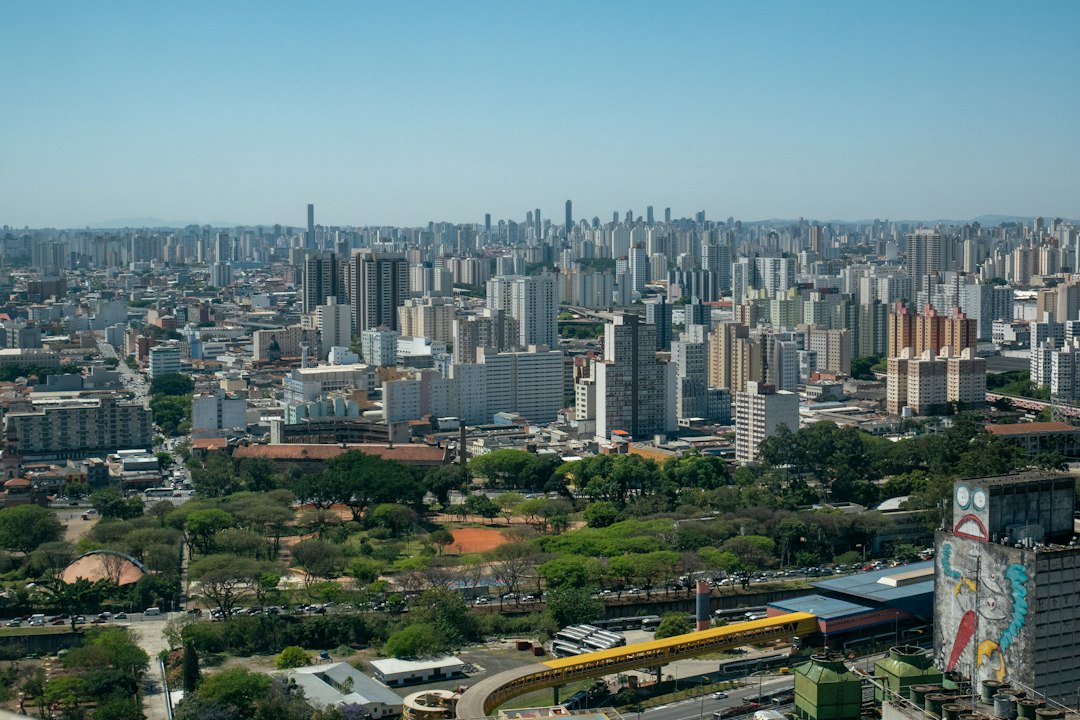
Photo by Gigi Visacri on Unsplash
📬 Follow Easy Brazil Investing for more English-language coverage of Brazil’s best investment opportunities. Or follow us on X
Leave a Reply