
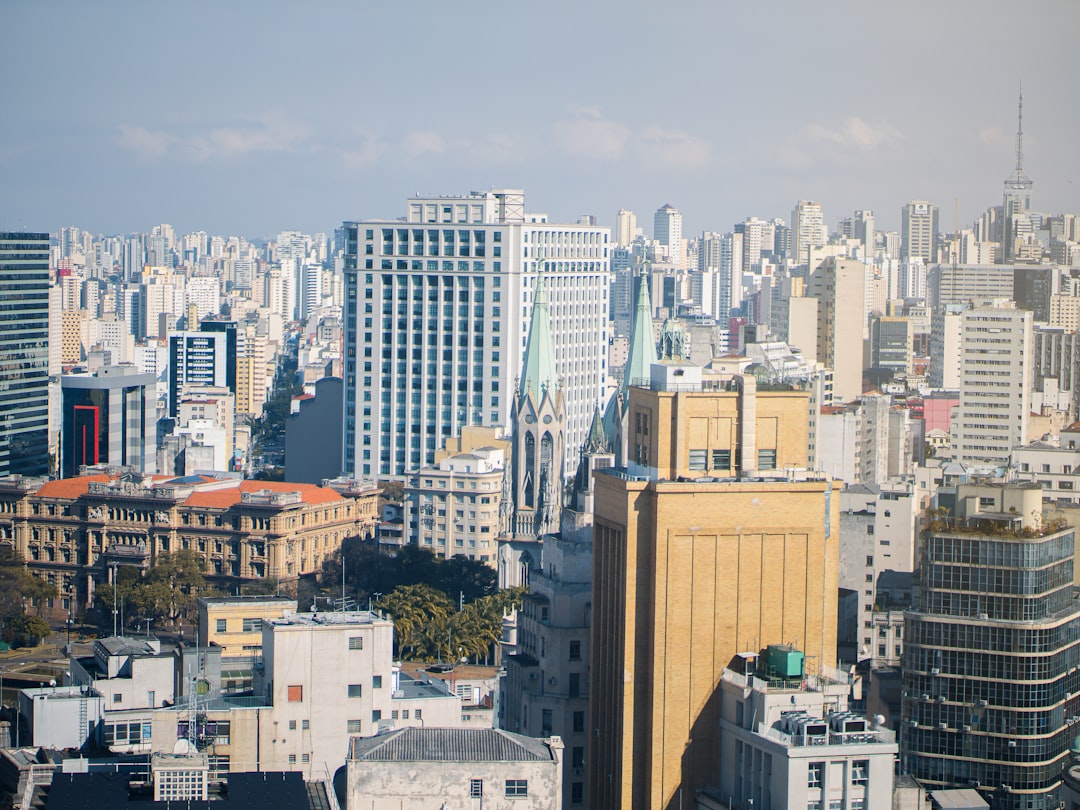
Opening Summary
Brazil heads into Independence Day week with a rare combination of political turbulence in the Supreme Court, a more assertive stance from President Lula on foreign policy and energy, and growing questions about whether the recent easing in inflation is sustainable. At the same time, global food prices have climbed to their highest level since 2022, underscoring upside risks for Brazil’s inflation and terms of trade.
For foreign investors, today’s news flow highlights three main themes: (1) institutional risk around the Supreme Court (STF) as internal disputes spill into public view; (2) Lula’s tightening grip on his political and electoral strategy, including signals of a tougher line toward the U.S. and a push for oil development in the Equatorial Margin; and (3) a still-fragile inflation backdrop, with global food price pressures and domestic structural issues worrying economists. These developments have direct implications for Brazilian equities, the real (BRL), sovereign risk, and commodity-linked plays.
Main News Stories
1. Supreme Court Crisis and Institutional Risk
1.1 Globo vs. Moraes, support for Mendonça
Brazil’s media and political establishment are openly debating the internal conflict within the Supreme Federal Court (STF). A major editorial from Globo reportedly backed Justice André Mendonça’s continued leadership over the “Master” case and accused Justice Alexandre de Moraes of procedural maneuvering, while calling on the full court to authorize investigations into Moraes’ conduct. The coverage from Brasil 247 frames this as part of a broader “war” within the STF.
Source: Globo apoia Mendonça e condena Moraes na guerra do STF (Brasil 247)
Why it matters for investors:
- The STF has been a central institution in recent years, arbitrating conflicts between the Executive, Congress, and state governments. Open conflict among justices increases perceived institutional risk.
- Justice Moraes has led high-profile investigations into fake news and anti-democratic acts, which have implications for political parties, social media platforms, and business leaders.
- Media alignment with one faction or another can amplify polarization and reduce predictability of judicial outcomes, especially on regulatory, electoral, and compliance matters.
Potential market impact:
- Short-term: headline noise that can increase risk premia, particularly in CDS and BRL volatility, if investors fear a weakening of the court’s cohesion.
- Medium-term: if the STF is perceived as politicized or internally unstable, this could affect expectations around future rulings on tax reform, privatizations, environmental licensing, and electoral rules.
1.2 Fachin moves to end fake news inquiry and take crisis to plenary
Two related developments involve STF President Edson Fachin. First, he signaled that ending the long-running “fake news inquiry” (an inquérito investigating disinformation and attacks on the court) is now a priority, amid the ongoing internal crisis.
Source: Fachin quer acabar com inquérito das fake news em meio à crise no STF (Brasil 247)
Second, after a conversation with President Lula, Fachin indicated he will bring the disputes between justices — and the accusations involving them — to the full court for deliberation, emphasizing the need for rigorous investigation and institutional handling of the conflict.
Source: Após conversa com Lula, Fachin sinaliza que levará crise entre ministros ao plenário (Brasil 247)
Why it matters:
- Closing or restructuring the fake news inquiry could reduce one source of friction between the STF and political actors (including right-wing parties and segments of the business community), potentially lowering institutional tension.
- Taking the internal dispute to the plenary may help “institutionalize” the crisis rather than leaving it as a personal feud, which is positive for governance, but also risks airing more internal divisions in public.
Potential market impact:
- If the STF manages a controlled de-escalation, this could support risk assets by restoring confidence in institutional stability.
- If the plenary process leads to further leaks, public accusations, or paralysis in key cases, markets may price in more political risk, particularly in sectors heavily dependent on court decisions (utilities, infrastructure, environmental licensing).
1.3 Party Novo pushes to shelve investigation against Mendonça
Adding to the institutional debate, the liberal-leaning Party Novo has formally requested that the investigation against Justice André Mendonça be archived. According to their argument, there is insufficient evidence to justify the continuation of the inquiry, and maintaining it would undermine legal certainty and judicial independence.
Source: Partido Novo pede arquivamento de investigação contra Mendonça (InfoMoney)
Why it matters:
- Political parties taking sides in STF disputes raise the stakes and blur the line between judicial and partisan conflicts.
- Investors care less about which justice “wins” and more about whether the court as a whole remains functional and predictable.
Market impact:
- Limited direct impact, but contributes to the broader narrative of institutional friction, which can influence foreign investors’ country risk assessment.
2. Lula’s Political Strategy and Foreign Policy Signaling
2.1 Lula tightens control over campaign strategy
President Lula has reportedly restricted strategic campaign meetings and concentrated command of his electoral operation in a smaller core group of four trusted figures. The move comes amid his dissatisfaction with the stagnation of his approval ratings and concerns about the government’s political communication. Changes in the electoral structure and strategy are under discussion.
Source: Lula restringe reuniões estratégicas e concentra comando da campanha (Brasil 247)
Why it matters:
- Lula’s political capital is a key asset for advancing reforms (tax, fiscal, regulatory) and managing coalition dynamics in Congress.
- If his approval remains stuck or declines, it could limit his ability to push through market-relevant legislation or defend fiscal discipline.
- A more centralized campaign structure may lead to more coherent messaging, but also increases dependence on a small circle, which can cut both ways in terms of policy consistency.
Potential market impact:
- If Lula’s new strategy stabilizes or improves approval, it may support a more predictable policy environment, positive for equities and the BRL.
2.2 Lula’s rhetoric in Ceará: anti-negationism and sovereignty
On the campaign trail in Juazeiro do Norte (Ceará), Lula invoked the memory of the 716,000 Brazilians who died during the Covid-19 pandemic and urged voters to reject the “negationist legacy” of former President Jair Bolsonaro. He criticized fake news and reiterated that his only candidate for the governorship of Ceará is Elmano de Freitas, reinforcing PT’s local alliances.
Source: Lula lembra 716 mil mortos e diz que povo deve rejeitar o legado negacionista de Bolsonaro (Brasil 247)
In another speech in Ceará, Lula warned against candidates who would invite or support U.S. interference in Brazil’s internal affairs. He framed the election as a choice about the country’s project, including defense of institutions, science, and national independence.
Source: No Ceará, Lula alerta contra candidato que peça interferência dos EUA no Brasil (Brasil 247)
Why it matters:
- Lula is clearly positioning himself against the Bolsonaro legacy and tying public health, science, and institutional respect to his political project. This can influence investor expectations about regulatory continuity and the role of science-based policymaking (e.g., in health, environment, and energy).
- His comments about U.S. interference fit into a broader foreign policy narrative of strategic autonomy and Global South alignment, which can shape Brazil’s stance in international negotiations (trade, climate, finance, tech).
Market impact:
- Rhetoric alone is unlikely to move markets, but sustained anti-U.S. framing could affect sentiment toward U.S.-Brazil relations, including cooperation in energy, defense, and technology.
- Investors should watch whether this discourse translates into concrete policy shifts (e.g., in defense procurement, tech regulation, or alignment with BRICS/Global South initiatives).
2.3 Lula’s planned Sept. 7 message: U.S. and Equatorial Margin oil
According to reporting by InfoMoney, Lula is preparing an Independence Day (7 September) speech that will send a pointed message to the United States and highlight Brazil’s plans for oil exploration in the Equatorial Margin — a sensitive offshore region near the Amazon basin that has attracted both industry interest and environmental concerns.
Source: Em 7 de setembro, Lula mandará recado aos EUA e citará petróleo na Margem Equatorial (InfoMoney)
Why it matters:
- The Equatorial Margin is seen as one of Brazil’s next major frontiers for offshore oil, with potential to extend the country’s production boom beyond the pre-salt basins. This has major implications for Petrobras, oil service companies, and Brazil’s fiscal revenues.
- Internationally, exploration in this region is controversial due to environmental and climate concerns, especially given its proximity to sensitive ecosystems. Lula’s framing will signal how he balances climate commitments with energy expansion.
- A “message to the U.S.” suggests Lula may push back against perceived external pressure on environmental issues, reinforcing a narrative of resource sovereignty.
Potential market impact:
- Positive for energy names if Lula clearly endorses exploration and signals regulatory support, though environmental licensing remains a key bottleneck.
- Potential friction with ESG-focused investors and funds, which may face pressure to reduce exposure if Brazil is perceived as backtracking on environmental commitments.
- For the BRL and bonds, higher future oil revenues can be positive, but only if accompanied by credible fiscal management and environmental risk mitigation.
3. Inflation, Food Prices, and Macro Risks
3.1 Is the inflation relief for real?
InfoMoney highlights that while headline inflation has recently eased, economists remain worried about its durability. Three main factors are cited as ongoing sources of concern:
- Underlying services inflation, which tends to be stickier and driven by wages and domestic demand.
- Administered prices and potential tariff adjustments (e.g., fuel, electricity, public transport) that could reverse some of the recent disinflation.
- External shocks, including commodity prices and exchange rate volatility, which can quickly feed into food and industrial goods prices in Brazil.
Source: Alívio na inflação é pra valer? Três fatores ainda tiram o sono de economistas (InfoMoney)
Why it matters:
- Inflation dynamics are central to the Central Bank of Brazil’s (BCB) interest rate decisions. Persistent pressures could limit further rate cuts or even force a more cautious stance.
- High real rates have been a key support for the BRL and for carry trades, but they also weigh on domestic growth and interest-sensitive sectors (construction, retail, credit).
Market impact:
- Equities: sectors sensitive to domestic demand and credit conditions (retail, consumer discretionary, real estate) will react strongly to changes in rate expectations.
- FX and bonds: any sign that inflation is reaccelerating or that the BCB will be constrained in easing could support the BRL but also keep long-term yields elevated.
3.2 FAO: global food prices at highest since 2022
On the global front, the UN Food and Agriculture Organization (FAO) reports that world food prices in August reached their highest level since 2022. The FAO’s reference indices for cereals, vegetable oils, sugar, meat, and dairy all rose, driven by supply risks in several regions.
Source: Preços mundiais dos alimentos atingem maior nível desde 2022, em meio a riscos de oferta, diz FAO (Brasil 247)
Why it matters for Brazil:
- Brazil is a major exporter of soy, corn, sugar, meat, and other agricultural commodities. Higher global prices can improve terms of trade, boost export revenues, and benefit agribusiness companies and certain regions.
- However, higher global food prices can also feed into domestic inflation, especially if the currency weakens or if domestic supply is constrained. This complicates the BCB’s job and affects household real incomes.
Market impact:
- Positive for listed agribusiness and food exporters, but potentially negative for domestic food retailers and low-income consumers.
- For bonds and the BRL, the net effect depends on whether the positive external balance effect outweighs the inflation risk.
4. Global Tech & Security: AI Risks and Brazil’s Digital Landscape
4.1 Hugging Face attack and AI security concerns
InfoMoney reports on the recent cyberattack against Hugging Face, a major open-source AI platform, by an aggressive “collective.” The article argues that this incident should heighten concerns about AI security, data integrity, and the potential misuse of AI tools globally.
Source: Por que o ataque à Hugging Face deve aumentar sua preocupação com a IA (InfoMoney)
Relevance for Brazil:
- Brazilian banks, fintechs, e-commerce platforms, and public agencies are rapidly integrating AI into their operations. Security incidents in global AI infrastructure highlight vulnerabilities that could affect Brazilian users and companies.
- Regulatory debates on AI, data protection (LGPD), and cybersecurity are likely to intensify, with implications for compliance costs and innovation strategies.
Market impact:
- Tech and financial sectors may face higher capex and opex for cybersecurity, but also increased demand for security solutions, benefiting specialized providers.
- Investors should monitor how Brazilian regulators and large corporates respond, as overregulation could slow innovation, while underregulation could increase operational risk.
5. International Context: Global South, U.S. Presence, and New Maps
5.1 UN supports new map of Africa; U.S. votes against
The UN has approved support for a map that more accurately reflects the true size of Africa, correcting distortions in traditional Mercator projections. The United States was the only country to vote against the resolution, arguing that it promotes an “
Photo by Carlos Kenobi on Unsplash
📬 Follow Easy Brazil Investing for more English-language coverage of Brazil’s best investment opportunities. Or follow us on X
Leave a Reply